
Resumen Ejecutivo
- Surgeons in Florida earn 6% more than the national average, versus 2% more for non-surgical specialists. Furthermore, physicians in Florida benefit considerably from the lack of a state income tax, amounting to thousands of dollars in extra disposable income every year.
- Surgical specialists command a 44% annual wage premium versus non-surgical specialists nationally, and a 48% annual wage premium in Florida.
- Midwestern and Southern states lead the nation in physician pay, while Northeastern and Mid-Atlantic states predominate in the bottom of the rankings.
- Physicians in heavily populated metro areas of the country earn significantly less than their counterparts in smaller cities within their own states, despite the higher cost of living.
- This counterintuitive trend holds in most states and is particularly marked in Florida, which represents an opportunity for physicians across the country that are flexible on location to increase their earnings by relocating to smaller cities within their same state.
- The higher earnings enjoyed by doctors in smaller cities represent potentially millions of dollars in increased net worth at the end of their careers versus their big city peers, given the exponential effect of compounding on investment portfolios over long time periods.
Key Facts
$404K
National Average Annual Wage, Surgeons
$427K
Florida Average Annual Wage, Surgeons
$281K
National Average Annual Wage, Non-Surgical Specialists
$287K
Florida Average Annual Wage, Non-Surgical Specialists
National Physician Compensation Trends
Physician Annual Wages by Specialty
National Average Annual Wages
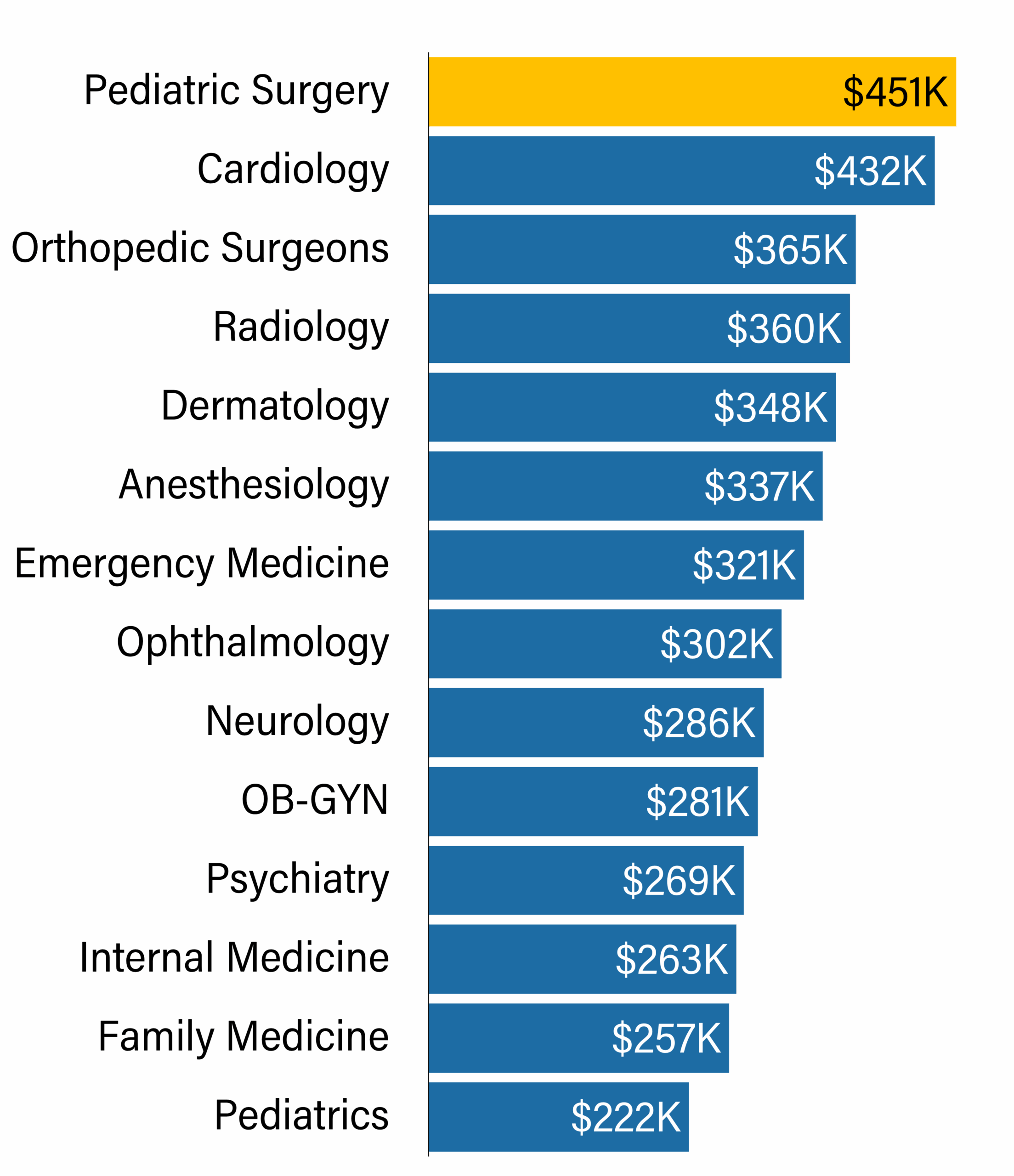
- Surgical specialists across the country tend to earn significantly higher wages than non-surgical ones, even when they share demographically-similar patient populations.
- Pediatrician earnings, for example, rank near the bottom in most states, in stark contrast to Pediatric Surgeons, which frequently rank among the top earning physicians.
Physician Annual Wages by State
Top 15 Highest Earning, State Averages
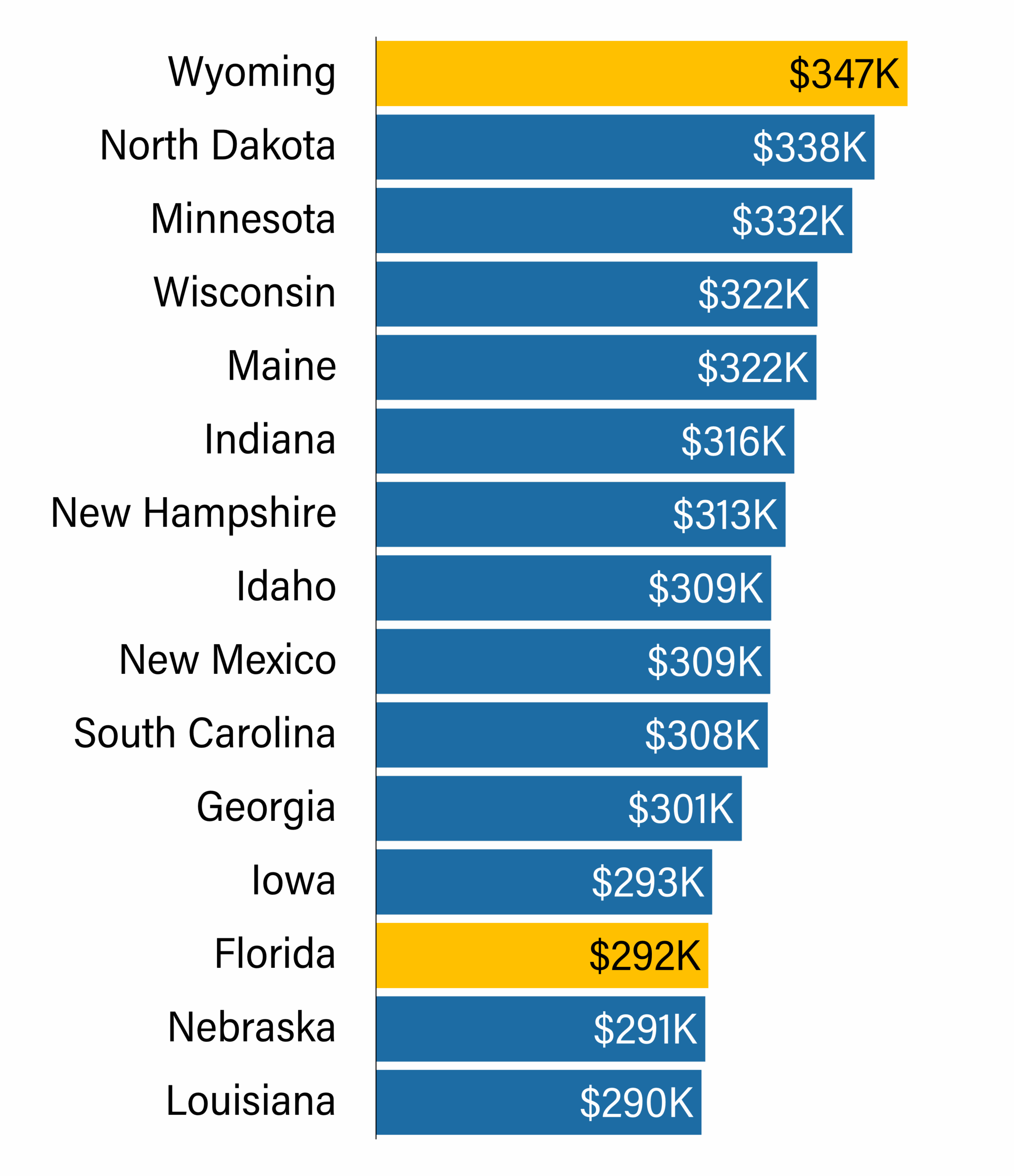
- Midwestern and Southern states dominate the list of top paying states, driven, on opposite ends, by national demographic population trends.
- A rapidly growing population is increasing demand for physicians in the South, driving up salaries. Meanwhile, in the Midwest, hospitals are raising salaries to try to hold on to their specialists, who are increasingly attracted by the lower-tax appeal of Southern states.
Physician Annual Wages by State (Continued)
Bottom 15 Lowest Earning, State Averages
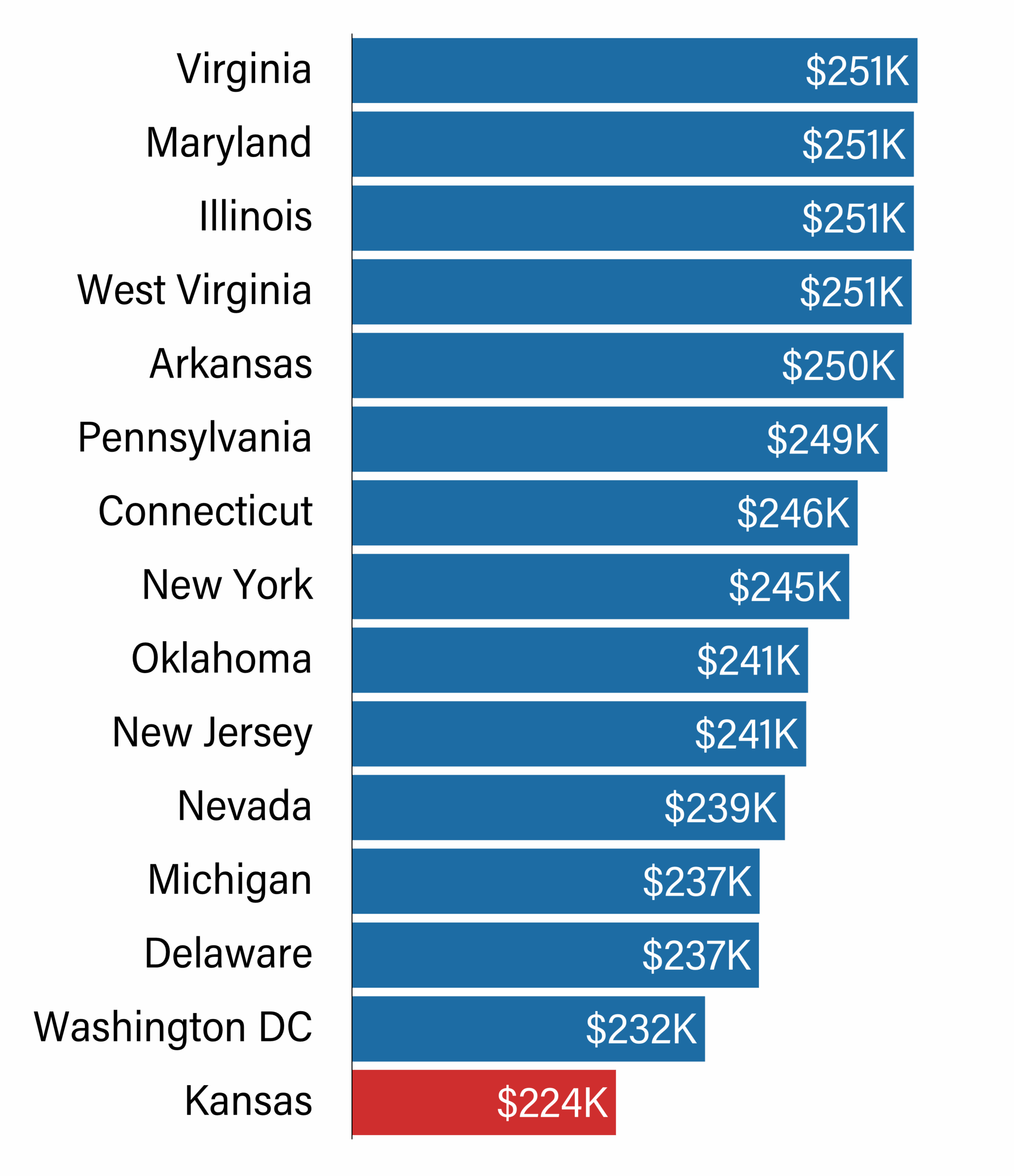
- Northeastern and Mid-Atlantic states dominate the list of lowest earning states for physicians, despite the higher cost of living and tax obligations residents of those states face.
- Should current trends continue, the higher wages and lower cost of living offered by Southern states are likely to apply upward pressure on physician wages in these areas over the next decade, which could drive significant increases to healthcare costs in the region.
Physician Annual Wages by Metro Area
15 Most Populated US Metro Areas, Average
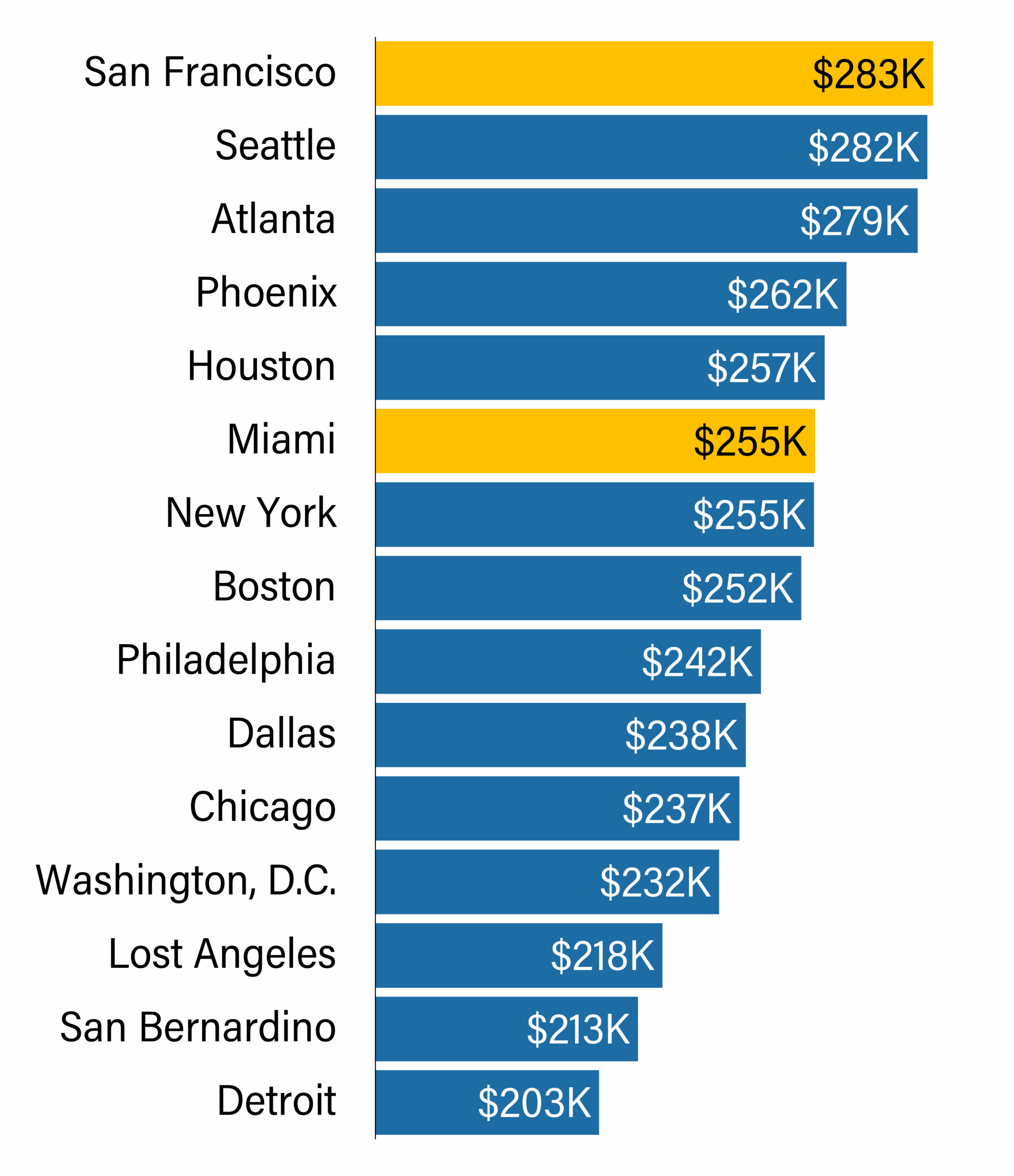
- There are indications of a negative correlation between city size and the average salaries of physicians, as the biggest cities are often in the bottom half in terms of pay within their states.
- This counterintuitive trend is observed across most states, and is likely driven by a higher labor supply in those metro areas, stronger price competition within local healthcare systems suppressing healthcare prices and the higher regulatory regimes big city hospitals often face.
Physician Compensation Trends in Florida
Physician Annual Wages by Specialty
Florida Statewide Average Wages
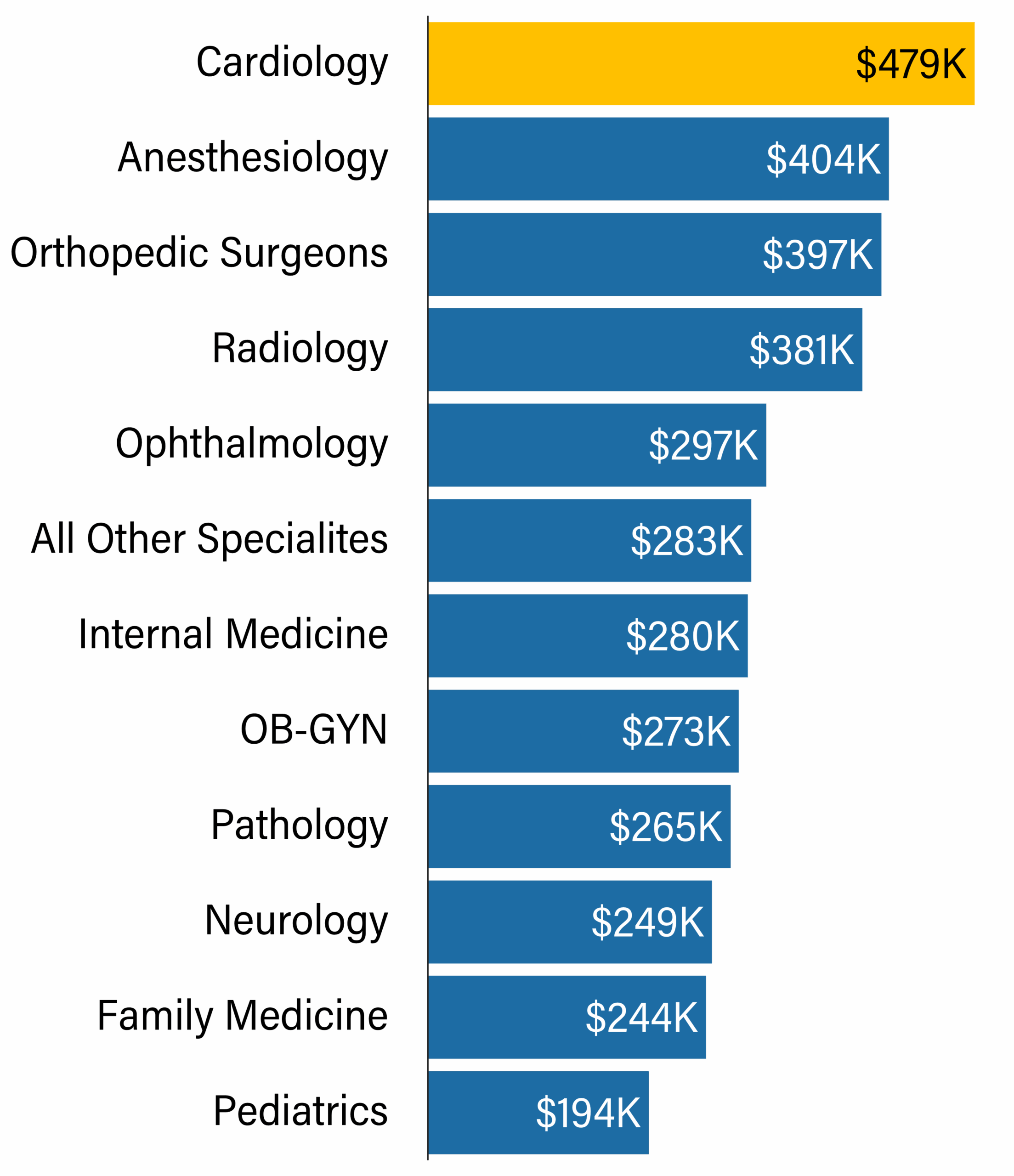
- Average wages for most surgical specialties in Florida are above the national average, while some popular non-surgical specialties, such as Pediatrics, are well below national figures.
- A growing and aging population is increasing demand for medical services in the state, which is likely to be reflected in higher salaries across specialties over the next 5-10 years.
Physician Annual Wages by Metro Area
Florida’s 10 Most Populated Metro Areas, Average
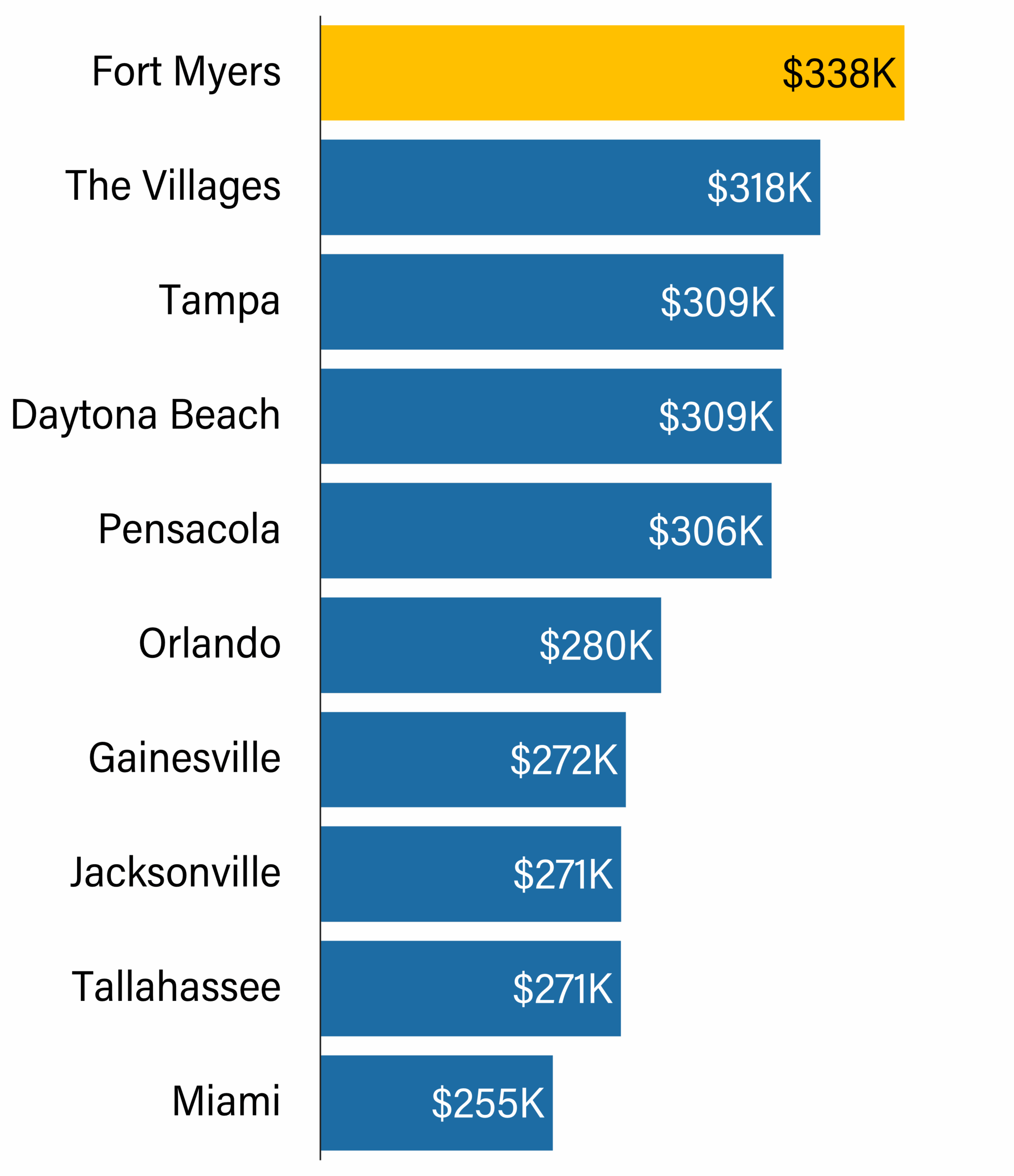
- Salaries in less dense areas of the state are significantly higher than in South Florida, while often also having a lower cost of living. This positively impacts the long-term financial outlook of physicians practicing in those areas compared to their South Florida counterparts.
- The $83K difference in average pay between physicians practicing in Ft. Myers and Miami, for example, would, all else being equal, likely translate to millions of dollars less in net worth at the end of their career for Miami-based doctors, given the compounding effect of investments.
Family Medicine, Annual Wages by Metro Area
Select Florida Metro Areas, Average
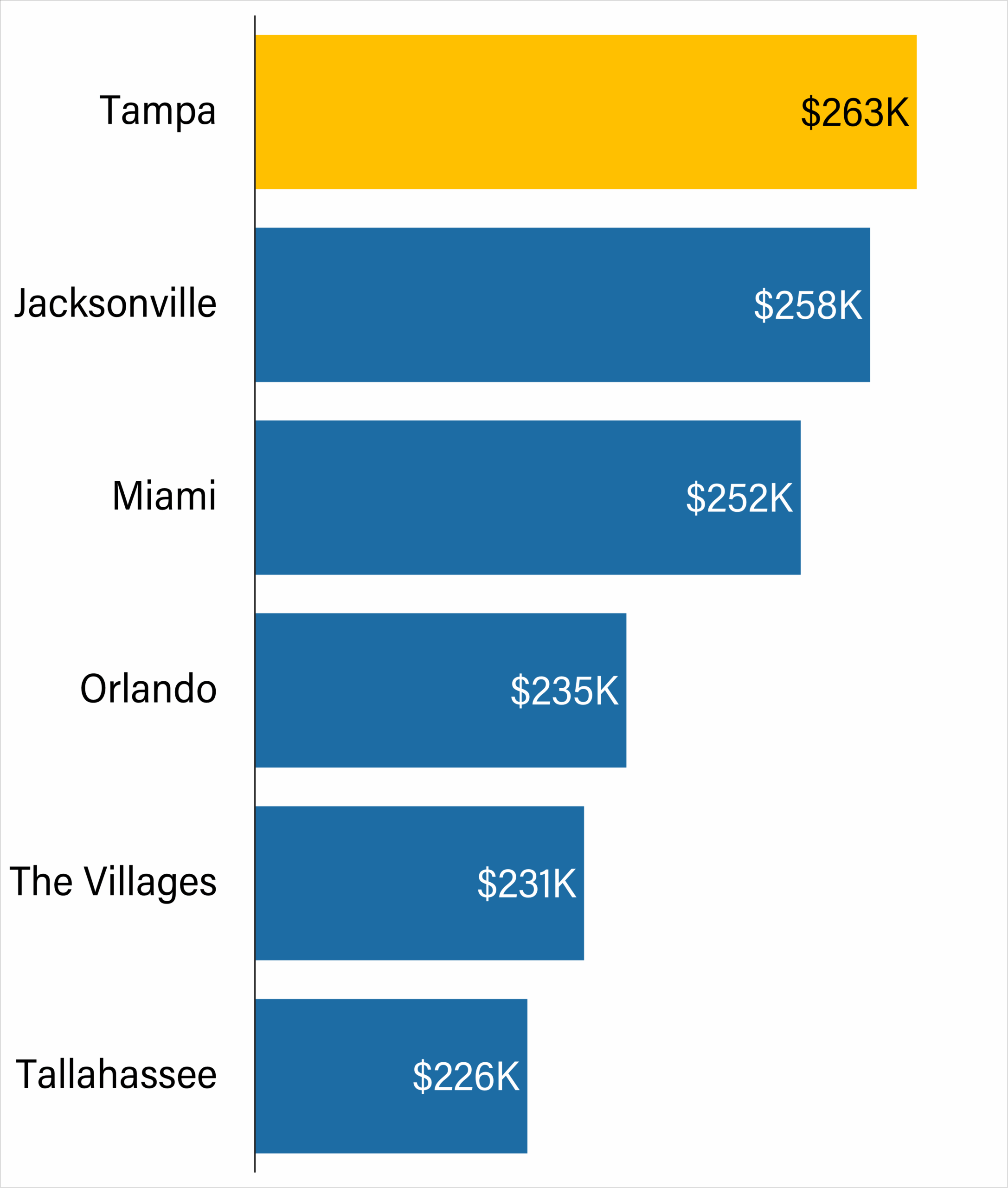
- Family Medicine specialists statewide have an annual average wage of $244K vs the $257K national average, although that is partially compensated by the lack of a state income tax.
- The rapidly increasing cost of living in Miami and other metros may escalate the pressure on local health systems to increase pay, although to what degree is uncertain, given the counterweighting effect of inbound physicians coming from states with even higher costs.
General Internal Medicine, Annual Wages by Metro Area
Select Florida Metro Areas, Average
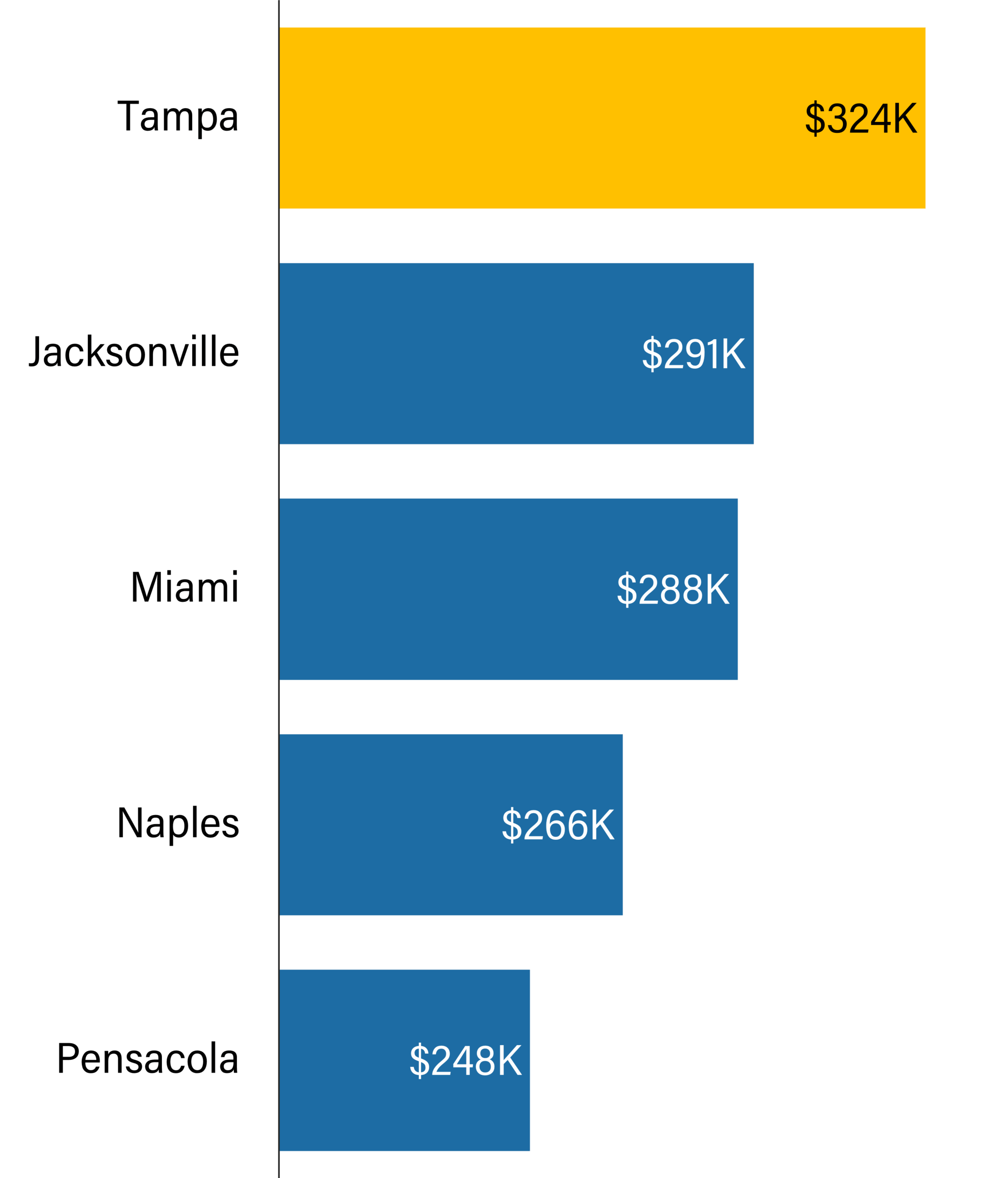
- General Internal Medicine specialists across the state generally earn more than the $263K national mean, with physicians in some Florida metros earning significantly above that marker.
- GIM physicians face one of the steepest variations in income across Floridian metro areas, indicating a potential labor supply imbalance. It represents an opportunity for specialists with flexibility to move to increase their wages substantially without changing states.