
Executive Summary
- Premier League players’ median guaranteed compensation per year grew at a 4.0% annual rate (CAGR) over the last 5 years, to $3.5 million for the 2025/2026 season
- EPL player wage growth significantly lagged the ~4.5% UK annualized inflation rate during the same period, leaving players earning less today in real terms than they did in 2021
- Premier League clubs account for half of the 10 highest-paying teams in Europe and 8 of the top 20, while traditional giants such as Real Madrid, Bayern Munich and Barcelona remain competitive in both pay and performance despite having weaker domestic leagues
- A struggling UK economy and the stagnating broadcast fees in its most recent domestic rights deal are leaving the league increasingly dependent on international revenues for growth
- Despite their large fanbases and high revenues, UK and European football clubs are typically not very profitable, driven by low fanbase monetization compared to US sports teams, the lack of a strong salary cap structure, sky-high player transfer fees and the constant threat of relegation
- Private Equity investments in European football clubs and infrastructure are injecting fresh capital into the ecosystem, but questions remain on whether operational improvements and valuation multiple expansion will be robust enough over time to justify the high valuation entry points
Premier League Key Facts
$3.5M / Year
EPL Median Player Compensation
4.0%
Compensation Annual Growth Rate ‘21/22-’25/26
~$2.2B / Year
Domestic Broadcasting Fees 2025-2029
~$1.8B
EPL Net Spend on Player Transfers, Summer 2025
English Premier League Compensation Trends
EPL Player Median Guaranteed Compensation Growth
2021/2022 – 2025/2026 Seasons
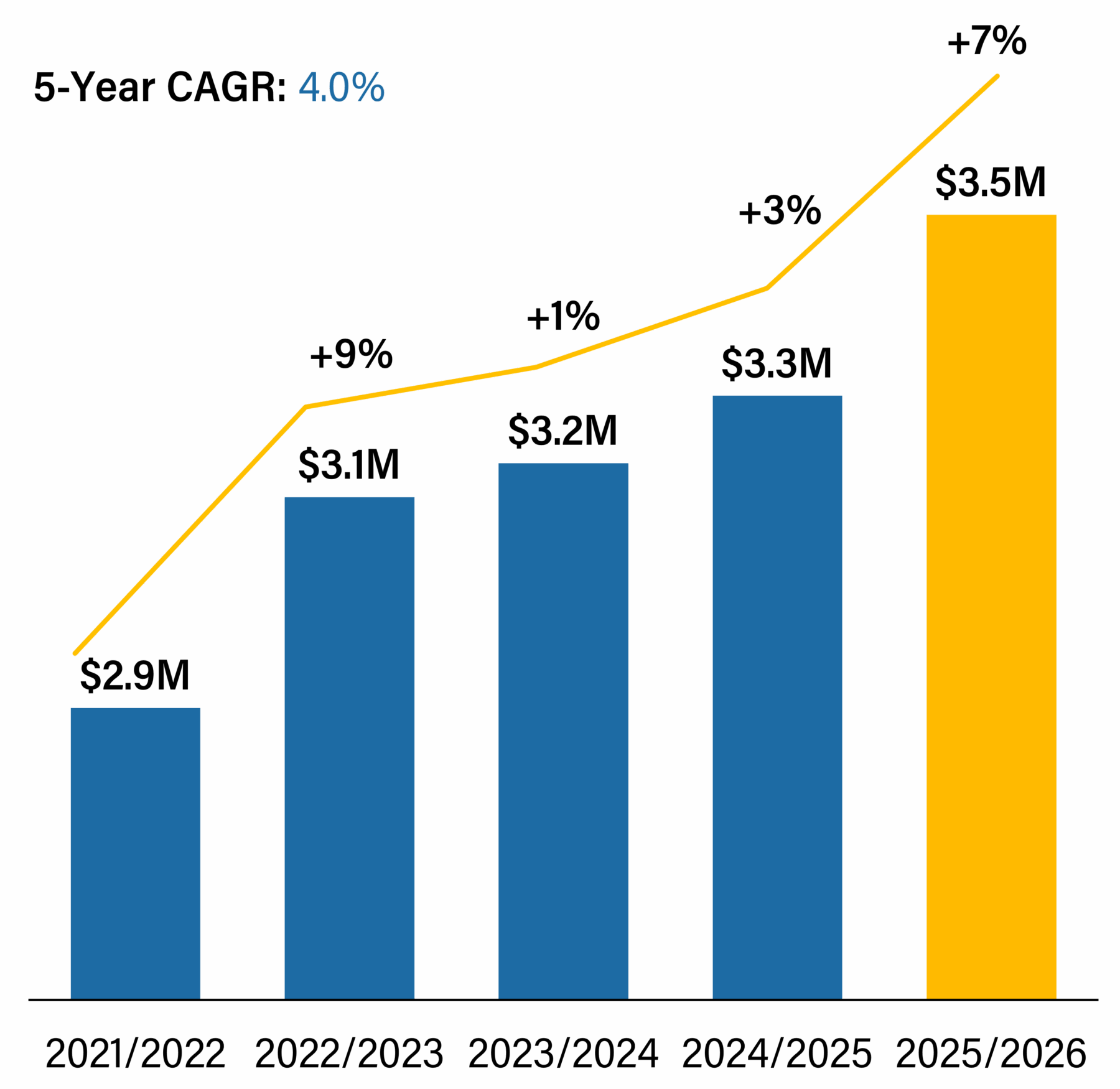
- Median guaranteed compensation for Premier League players grew at a 4.0% Annual Growth Rate (CAGR) over the last 5 seasons to $3.5 million per year in the 2025/2026 season, with the significant jumps in 22/23 and 25/26 reflecting new domestic media deal cycles that started in those seasons
- Despite the headline growth figure, salaries have grown below the ~4.5% annualized UK inflation rate during the same period, meaning that players are earning less in real terms today than in 2021
- The stagnating wage growth in real terms is likely a consequence of a weak UK economy, as the latest domestic media deals offered only a ~4% annual fee increase vs the 2022-2025 deals
EPL Median Guaranteed Compensation by Position
2025/2026 Season
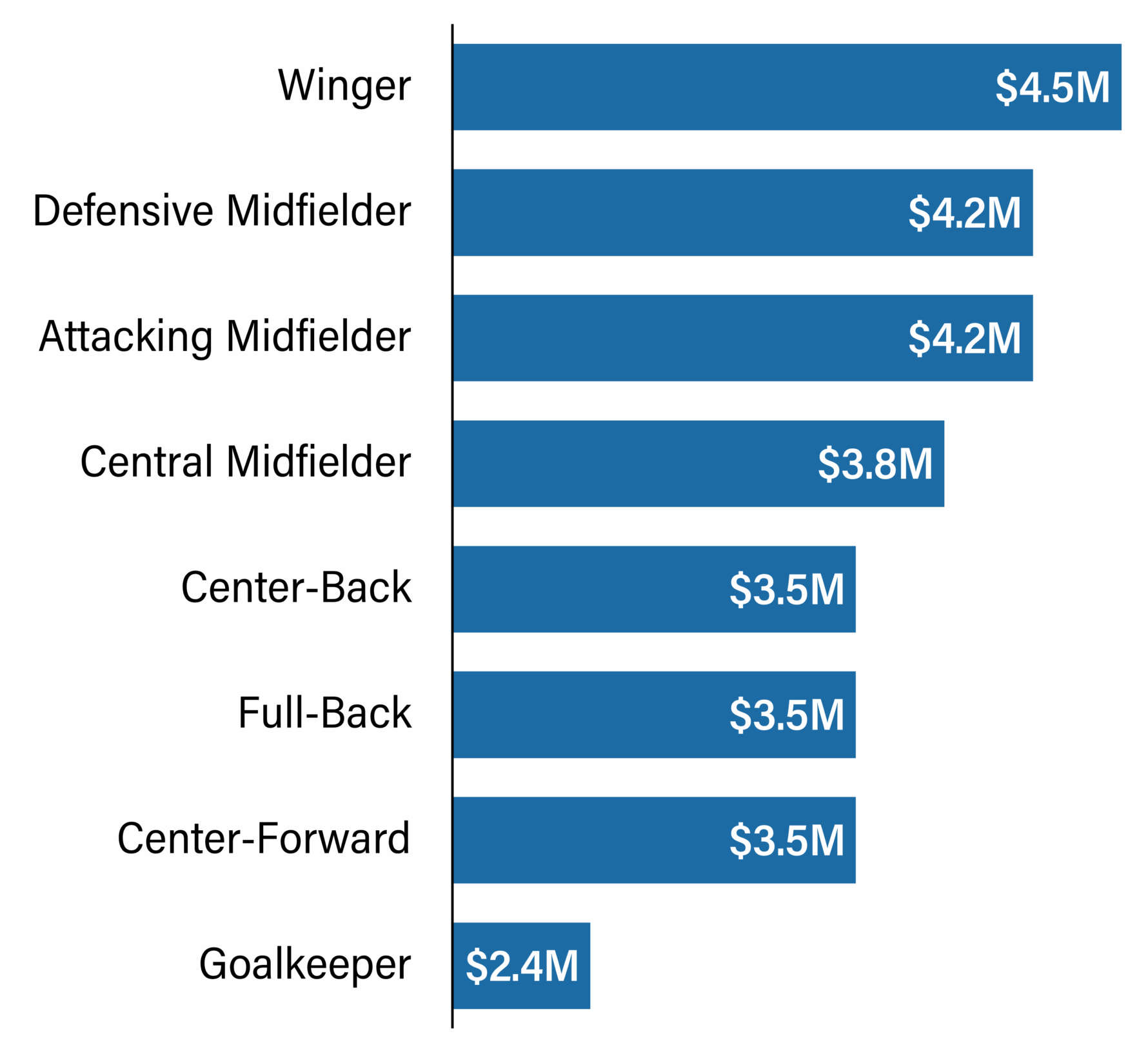
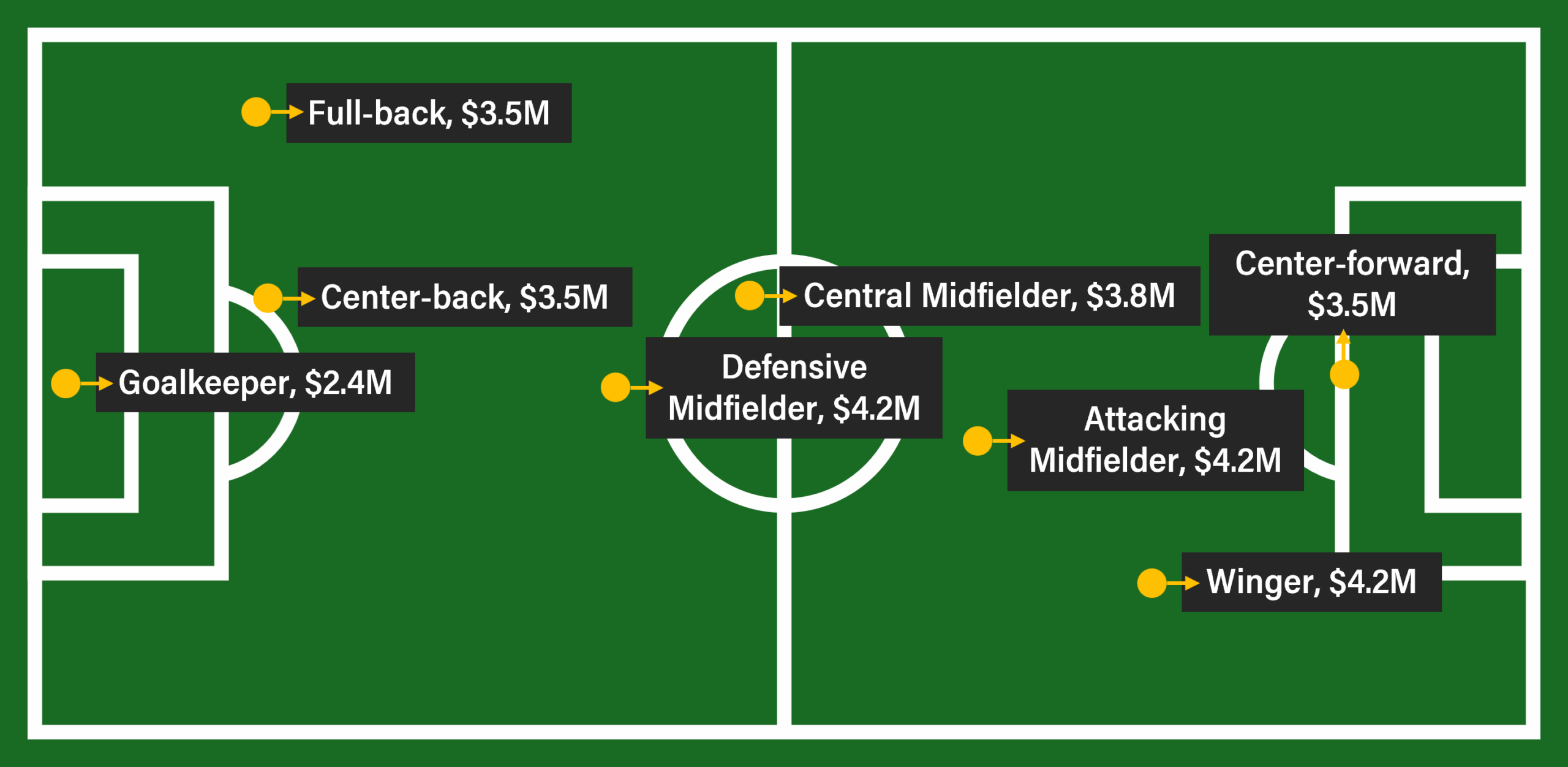
- Winger and midfield positions dominate the highest paying rankings, with the chasm in median salaries between center-forwards and wingers a reflection of Premier League managers’ typical tactical preference to attack the box from the sides rather than through the middle of the pitch
- Given the league’s strong competition for goal-scoring talent, teams prioritize spending on positions in the upper half of the pitch, with defensive positions frequently filled by younger players
EPL Median Guaranteed Compensation by Club
2025/2026 Season
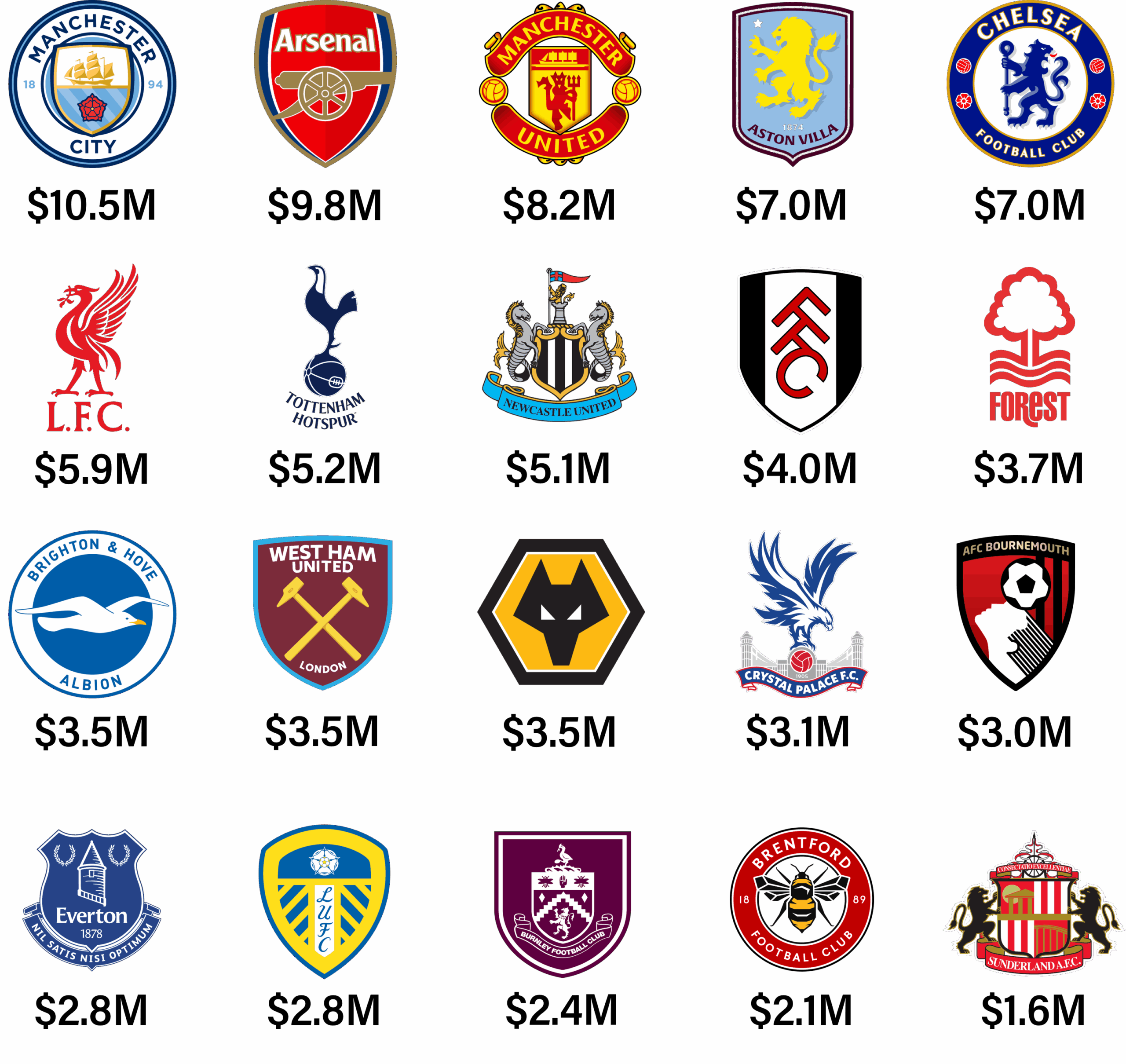
- In 2024, 7 of the 10 clubs with the highest median compensation ended in the top 10 of the standings table, although top-paying Manchester United and Tottenham ended closer to relegation
- While the league employs financial mechanisms to promote competitive balance through equal sharing of some revenue streams, a stark financial inequality remains, with top five team’s median compensation being 4.4 to 6.6 times higher than that of Sunderland, the lowest ranked team
Big 6 Median Guaranteed Compensation by Club
2021/2022 – 2025/2026 Seasons
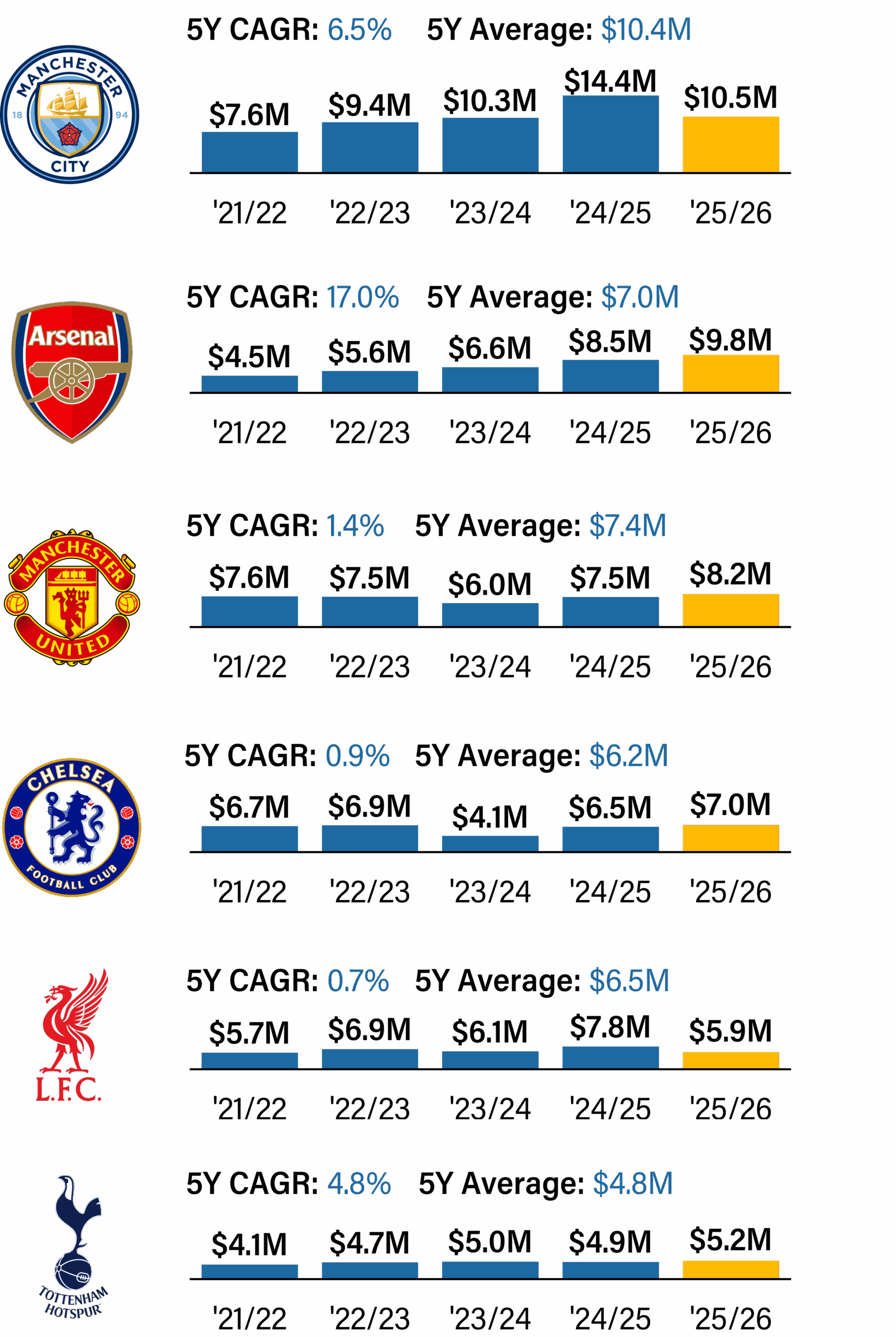
- Arsenal has grown its payroll at a significantly higher rate than the rest of the “Big 6” over the last 5 years, an increase that has mirrored its growing success on the pitch and its decreased reliance on lower-paid, young homegrown players under manager Mikel Arteta
- While consistent compensation growth for Manchester City seemed to have helped it during its 4-year reign atop English football, a substantial compensation increase in the 2025-2026 season was followed by its worst season in almost a decade, suggesting on-the-pitch limits for financial power
Global Football Median Compensation by League
2025/2026 Seasons1
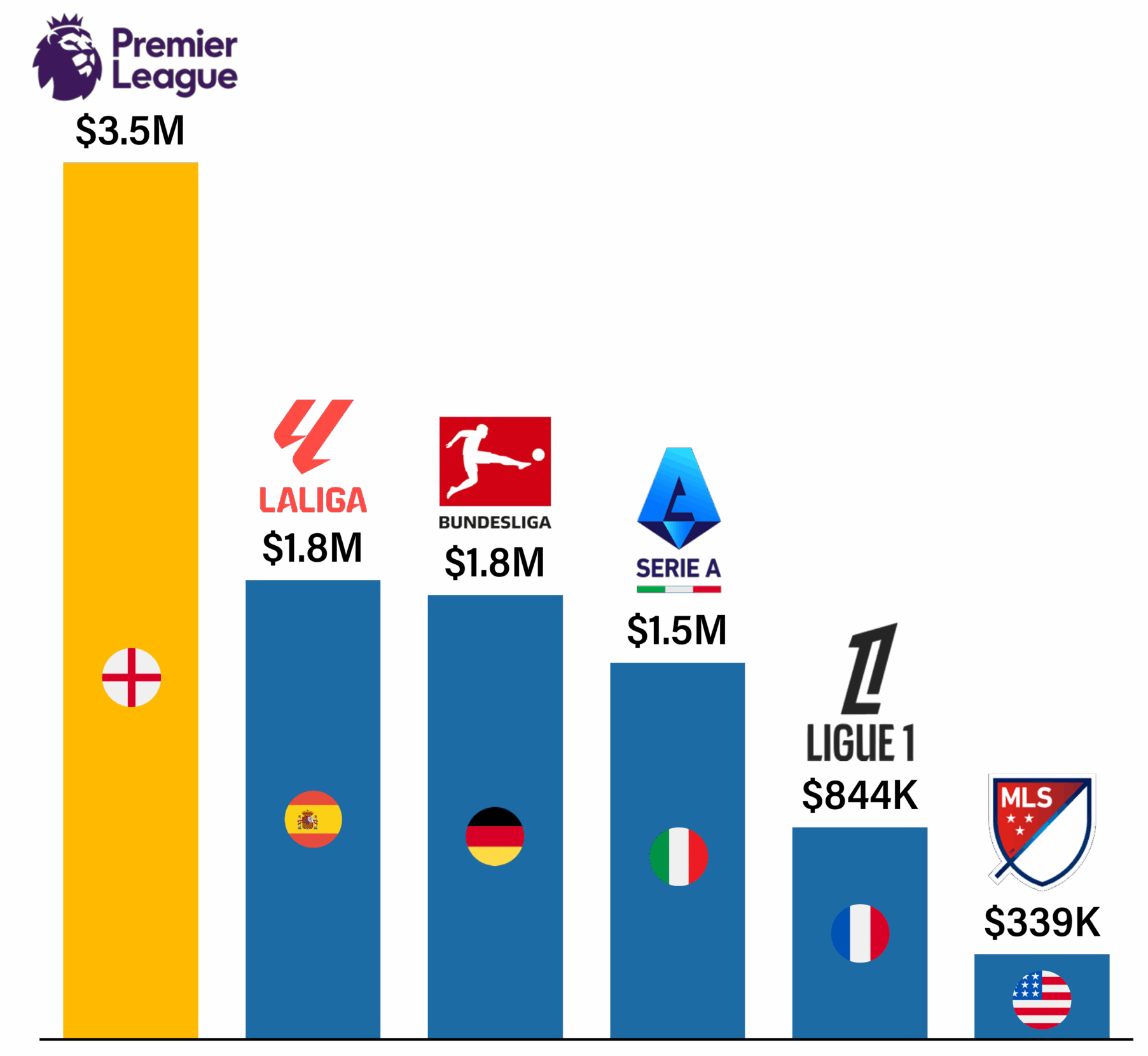
- Premier League median compensation is still far and away the highest in the world, almost double that of La Liga and Bundesliga, its closest peers, and over 10x the MLS’ median compensation
- Weak European domestic economies, decreasing consumer purchasing power and high streaming piracy rates across the continent may limit player wage growth over the coming years, as local broadcasters struggle to keep up with the broadcast fee increases of years past
Top 10 European Teams by Median Compensation
2025/2026 Season
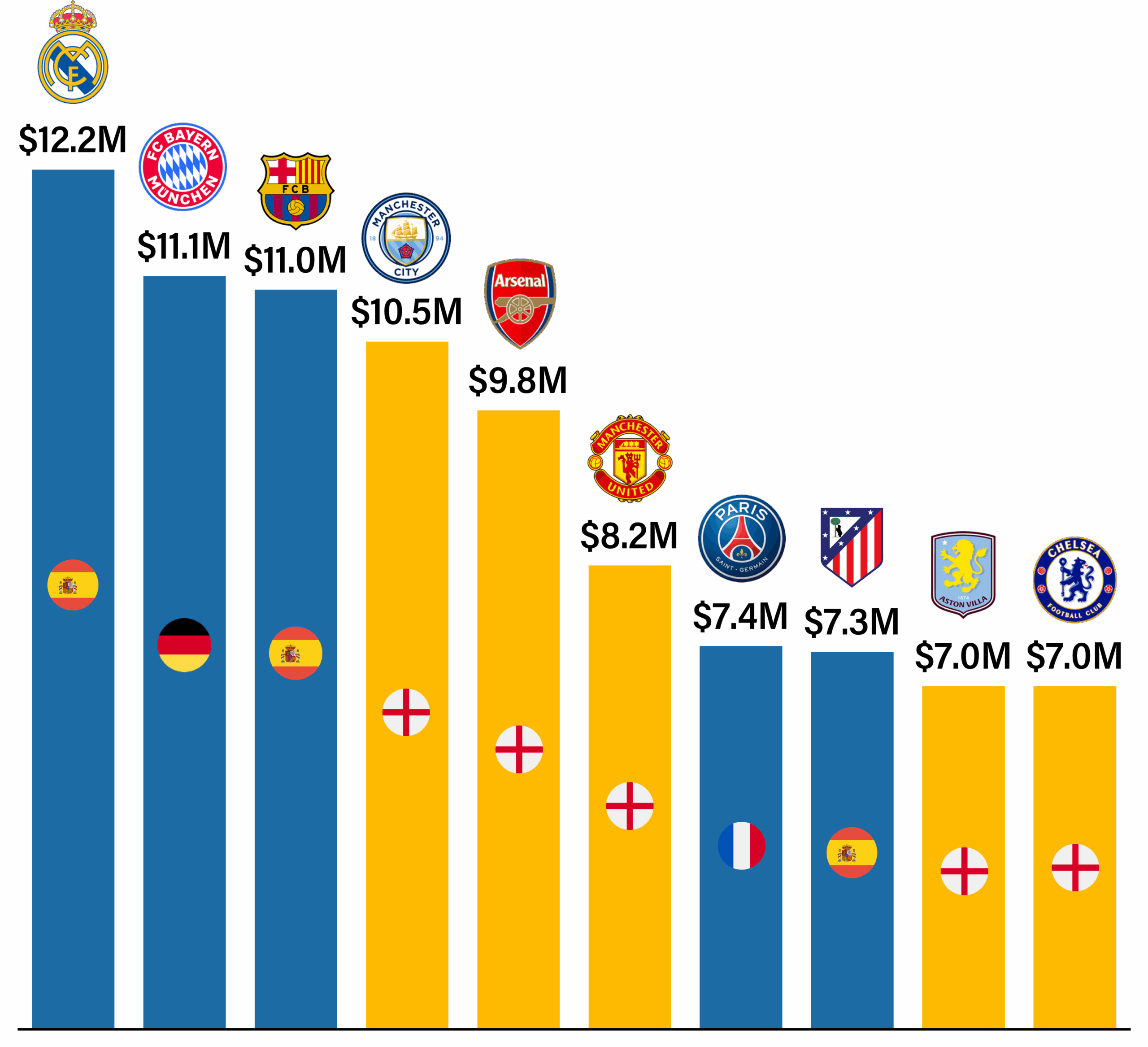
- Premier League clubs make up half of the top 10 paying teams in Europe and 8 of the top 20, although old-line teams such as Real Madrid or Bayern Munich remain highly competitive on pay, global popularity and on-the-pitch performance despite weaker domestic competitions
- The current wave of Private Equity-backed investment in European football is injecting fresh capital into the ecosystem, but questions remain on whether operational improvements and valuation multiple expansion will be robust enough over time to justify the high valuation entry points
EPL Median Compensation vs Top 5 US Sports Leagues
2025/2026 Season2
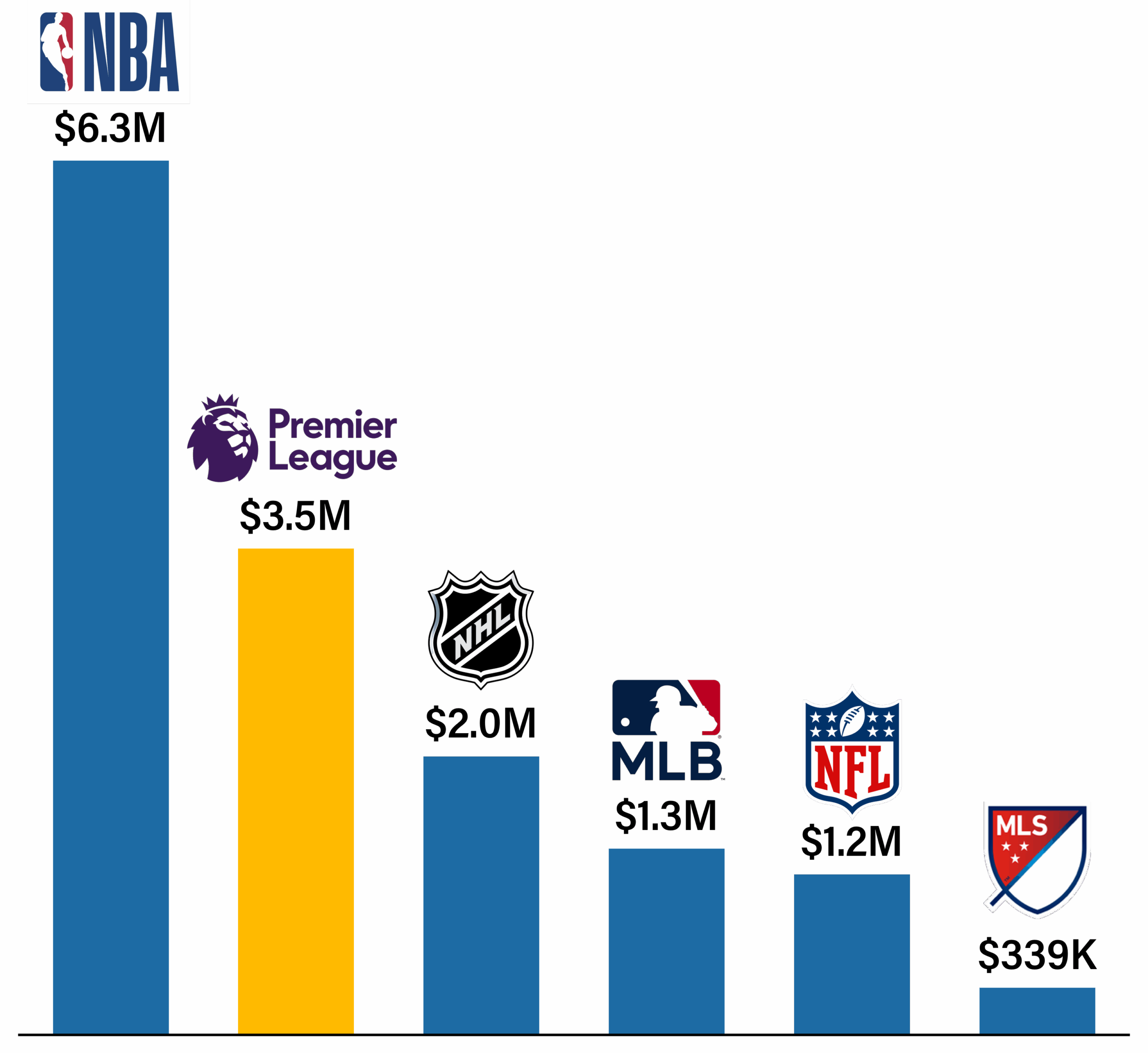
- The Premier League’s growing global fanbase has powered its financial growth over the last decade and enabled its median compensation to be higher than at most US sports leagues
- Despite their large fanbases and high revenues, football clubs in Europe are typically not very profitable, driven by weak fanbase monetization compared to US sports teams, the lack of a strong salary cap structure, sky-high player transfer fees and the constant threat of relegation