

Physicians often seek investments that balance robust returns with stability, particularly with their bond and fixed income allocation. Private credit, a rapidly growing asset class, offers an alternative to traditional bonds, potentially delivering higher returns with a compelling risk-return profile. This article evaluates whether physicians already investing in bonds should allocate a portion of their portfolio to private credit.
Understanding Private Credit Funds
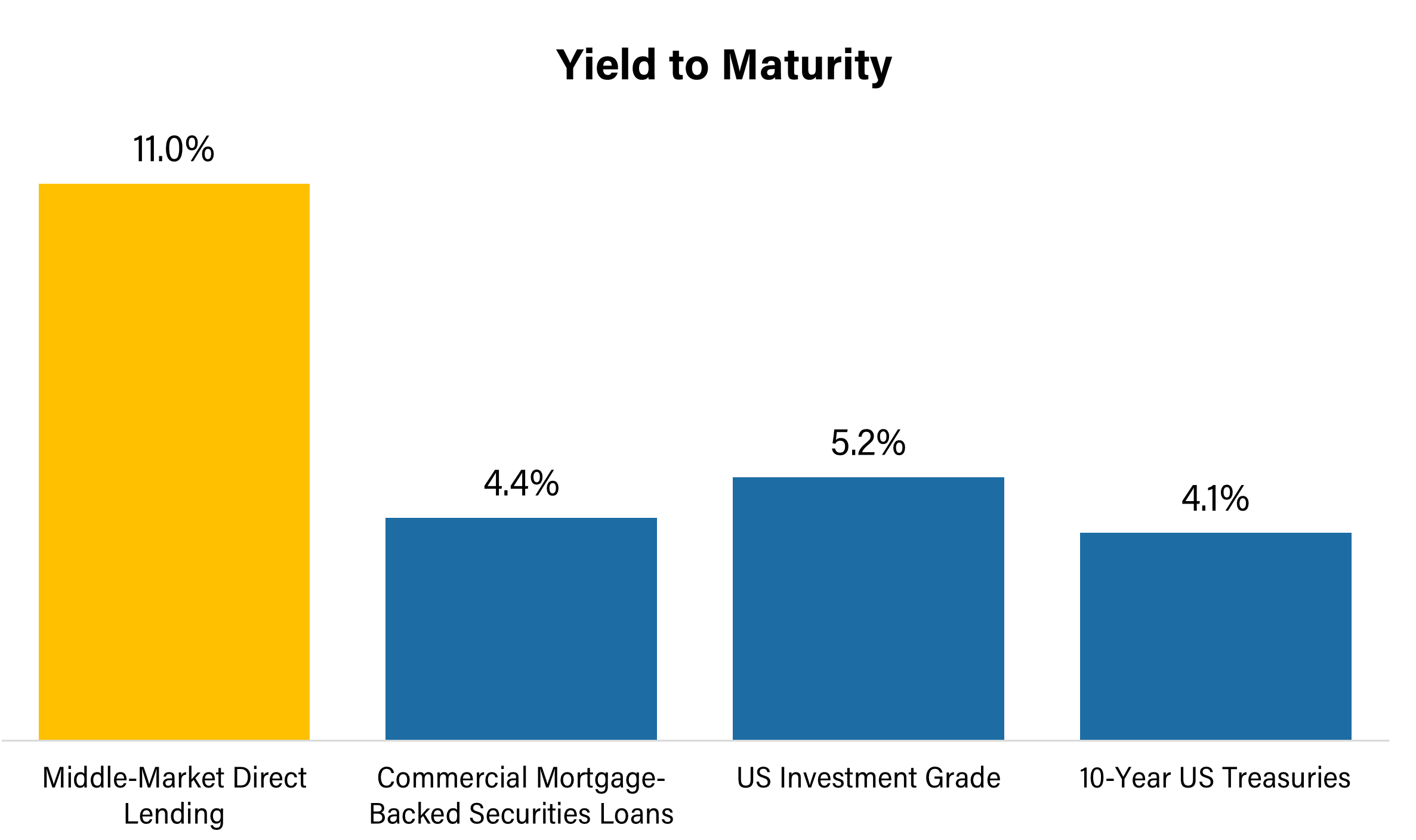
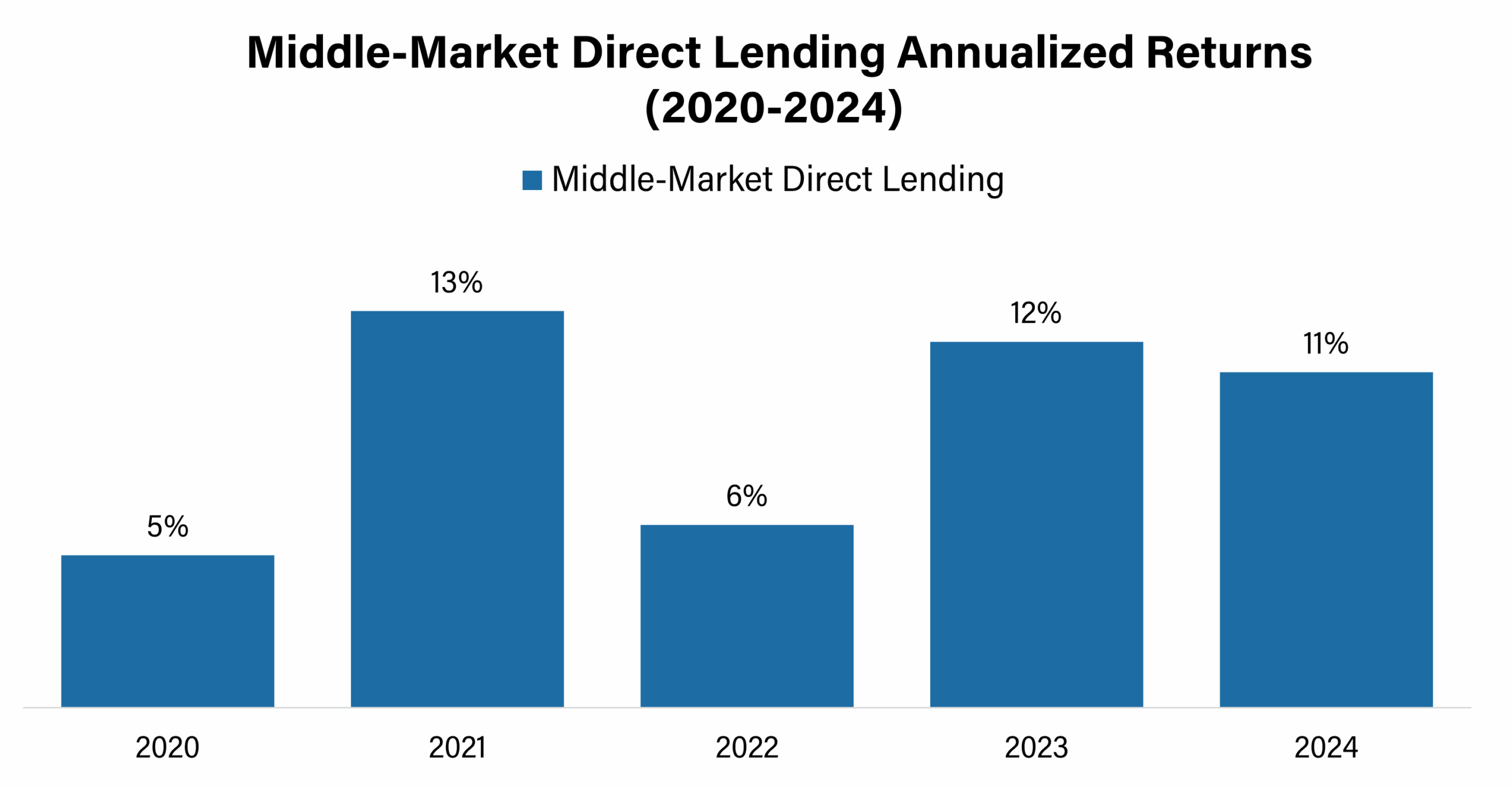
Private credit funds pool investor capital to provide loans directly to companies, often mid-sized firms or high-growing startups, competing with traditional banks as a source of debt capital. Some of these funds offer yields of 10-12%1, a significant premium over the ~4.5% yields of 10-year Treasuries2 and ~600 basis points over investment grade corporate bonds given the higher risk profile of borrowers. Private Credit has grown exponentially, and as of the end of 2023 these funds were already a ~$2 Trillion market, 10x since the Great Recession3. Capital is typically committed for 3-6 years.
Should Physicians Allocate Capital to Private Credit?
For physicians with allocations to bonds and fixed income, private credit is a compelling alternative asset class due to its historical performance and interest premium over traditional debt. With a ~600 basis point premium over investment grade corporate bonds4, private credit offers a significant yield advantage. According to Oaktree Capital Management, Private Credit has also outperforming the recovery rates of non-investment grade debt5.
However, physicians should approach private credit cautiously and employ thorough due diligence to select funds that align with their risk tolerance and financial goals. The complexity of private credit, with varying loan structures and manager expertise, underscores the need for careful evaluation. Generalist private credit funds, which diversify loans across multiple industries, can mirror the broad economic exposure of the Russell 2000 index, reducing sector-specific risks while capturing double-digit returns.
Investment Risks to Consider
Despite its appeal, private credit’s rapid growth raises concerns about potential declines in borrower quality and lending standards. The opacity of borrower profiles, compared to public bonds, complicates risk assessment, and payments-in-kind (PIK) structures, where interest is paid with additional debt, may inflate risk if borrowers face distress. Regulatory and monetary policy shifts could also introduce volatility, as over-regulation of the banking market may push stronger borrowers to private credit and declining interest rates could disrupt it and compress margins.
Sticking to well-diversified generalist funds from top managers and being conservative with allocations could help to minimize risks.
How much should physicians allocate to Private Credit? In general, we recommend no more than 10%.
For physicians already allocating a part of their portfolios to bonds, depending on age and risk tolerance, their allocation to Private credit should come from what they’re putting into bonds, not equities. To balance the high yield premium with prudent risk management, we generally recommend Private Credit to represent no more than 10% of the total portfolio. For younger physicians with longer investment horizons, an allocation on the higher end (e.g., 8-10%) may be reasonable. Older physicians, closer to retirement, should lean toward 0-5% to minimize risk, as their ability to recoup losses is limited.
Handal Dunaway: Specialized in Helping Physicians Invest in the Financial Markets
We understand that for doctors, dedicating enough time to finding and managing investments on top of the time you dedicate to patients, paperwork, and family obligations can be overwhelming—and we are here to help. Our team specializes in working with physicians and doctors in the US and across the world, helping them build wealth through personalized investment strategies adapted to the particular needs of every client. We take the time to understand doctors and their unique needs, and work with them throughout their financial journeys.
Você já exerce uma das profissões mais difíceis do mundo. Estamos aqui para ajudá-lo a conquistar o sucesso financeiro de longo prazo pelo qual você tanto trabalhou.