

In the past few weeks, gambling investigations have been piling up across major sports leagues like the NBA, MLB, and UFC. The headlines focus on the indictments, and many in the media and the public have focused on demonizing the players, coaches, and referees as the ultimate villains for participating in these elaborate gambling schemes.
Yet, the key underlying issue has hardly been discussed: Leagues have normalized fragile personal finances among athletes and coaches. The vast majority of athletes end up in precarious financial positions when they retire, and many struggle even during their careers. Combine short earning windows, limited financial planning and easy access to gambling, and you create conditions in which insider betting is not surprising, but expected.
Why It Keeps Happening
Athletes, coaching staff, their families, and close friends hold valuable, time-sensitive information that can be monetized in this era of easy gambling. Many also operate with thin liquidity and high financial obligations. A small, “harmless” bet placed by a friend or family member feels like easy money. The telephone game begins.
By the time integrity vendors flag patterns, a network has already formed. This is not only about greed. It is about financial vulnerability in an environment that lays the entire responsibility of long-term financial health on the shoulders of the athletes and coaches themselves, many of whom have never taken a personal finance course or have been surrounded by unscrupulous figures.
Different Sports, Same Pattern
In the NBA, federal arrests tied to inside information and rigged poker operations triggered congressional attention. In MLB, federal prosecutors allege pitch manipulation and coordinated betting around specific pitch outcomes with six-figure proceeds. In the UFC, a favored fighter’s odds collapsed before a first-round loss, prompting integrity alerts, refunds from sportsbooks, and contact with federal law enforcement.
Each case involves alleged use of non-public information or performance manipulation. Each reflects weak financial and compliance controls around people who can influence outcomes.
(All individuals named in ongoing matters are presumed innocent until proven guilty.)
The Betting Ecosystem Is Now Too Big To Ignore
Globally, regulated sports betting and gaming is expected grow 8% annually and become a $368 billion market by 2030, with additional upside as online penetration expands and currently unregulated markets (~$210 billion) evolve, according to Flutter, parent company of FanDuel. Flutter reported $14B in revenues for FY2024, while DraftKings reported $4.8B of FY2024 revenue and expects it to grow to ~$6.45 billion in 2025.1
Regulated Sports Betting and iGaming Market Size by 2030
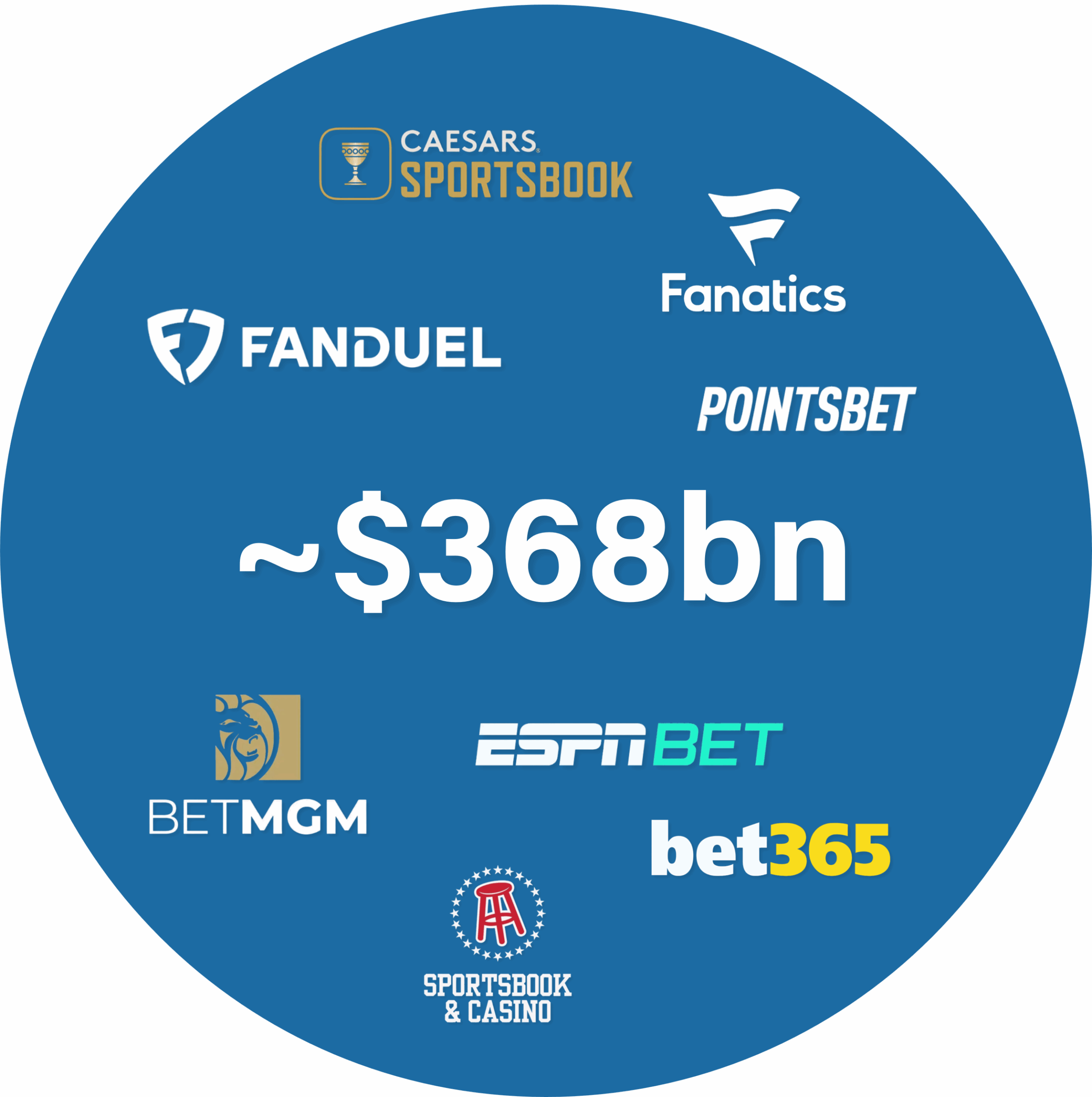
The money flowing around athletes is large, liquid, and growing. Ignoring player financial health and trying to control corruption only through rule adjustments and compliance tools is a losing long-term strategy.
How to Clean this Mess Up? Leagues Must Employ Both Short-Term and Long-Term Solutions
Short-Term: Borrow the SEC Playbook
Financial institutions are required to uphold market integrity through highly-sophisticated compliance systems. Leagues and teams can adopt a similar architecture, tailored to sports.
1. Monitored Accounts and Prohibited Holdings
Employees at broker-dealers and investment banks, as well as the members of their households, are typically not allowed to hold or trade individual securities without having their trades simultaneously reviewed by the compliance department at their firms and the Securities and Exchange Commission (SEC).
This rule is key to make it exceedingly hard for both the employees and the people around them to successfully trade on insider information, with cutting-edge technology deployed to flag extraneous behavior on the eve of earnings reports or M&A announcements. Their personal accounts across the entire financial system are also monitored for abnormal movements.
This system can and should be adapted to sports. For starters, active players, coaches, referees, judges, matchmakers, trainers, medical staff as well as, importantly, the members of their households should be prohibited (and many already are) from wagering on any market related to their own sports. No proxy betting. No exceptions.
Additionally, professional and semi-professional athletes, coaches, members of their households and individuals with access to sensitive information should also be required to submit to technological monitoring of their financial accounts. There are robust monitoring systems already deployed in the financial industry to detect money laundering, insider trading and financial malfeasance, which could be reconfigured to detect anomalous behavior in the financial accounts of sports professionals.
2. Pre-Clearances
Bankers must pre-clear trades. Similarly, leagues could require pre-clearance for any gambling activity by athletes, et. al. in sports other than their own. Athletes are going to be much more likely to have insider-information about other athletes, so limiting this could significantly limit opportunities for malfeasance.
3. Insider Lists and Beneficial Ownership
Capital markets maintain insider lists and beneficial ownership disclosures. Leagues should maintain a confidential registry of covered persons and related accounts, including household, close associates, and corporate entities. Coverage should extend to agents and any staff with competitive or medical information.
Long Term: Financial Health Is Integrity Infrastructure
Compliance alone will not resolve a financial vulnerability problem. Motivated parties and financially desperate athletes can always find ways to get around rules. If leagues truly want to reduce the incentives that drive insider betting, they must treat athlete financial stability with the seriousness it requires. They must help current and retired athletes be financially stable, so they won’t risk losing everything by getting involved in illegal betting. Financially-secure athletes are much less likely to get involved in these shenanigans.
Athletes need structured financial planning early in their careers, not intervention after damage has already occurred. This means:
- Mandatory baseline financial education
Not one-off seminars. A standardized curriculum built into development programs, rookie onboarding, and continuing education when they are active on the pitch and after retirement. Topics should include taxes, cash flow planning, debt, insurance, long-term investing, and the realities of short earning windows. Education should be delivered by regulated, professional financial advisors, not just brand partners. - Regular financial checkups
Just as players receive medical evaluations, they should receive periodic financial health reviews. These checkups can flag early warning signs such as persistent advances, leverage against future contracts, unpaid tax obligations, or unusually high recurring expenses. Identifying stress early prevents crisis behavior later. - Access to licensed, fiduciary investment advisors
Advisory support should come from professionals legally required to act in the athlete’s best interest. Not friends, agents’ associates, or unregulated “wealth managers.” Teams and leagues do not need to control the relationship — but they should verify credentials and ensure athletes have access to qualified advisors. - Discreet liquidity support channels
Financial stress often escalates in silence. A confidential mechanism for emergency liquidity — bridge loans, structured advances, or league-sponsored financial counseling — reduces the appeal of quick gambling-related payouts. The goal is not dependency. The goal is to prevent crisis-driven decisions. - Monitoring financial stress indicators
This is not about surveillance or paternalism. It is about acknowledging that financial stress influences behavior. Identifying patterns such as rapid lifestyle inflation, reliance on informal lenders, or recurring tax or legal issues allows for timely intervention.
Athletes spend their careers developing athletic performance, not investment expertise. Expecting them to independently turn short-lasting, sometimes volatile earnings into long-term wealth is just plain unrealistic. Providing a professional financial infrastructure reduces exposure to risk and improves decision-making.
Financial stability reduces the attractiveness of insider betting. It strengthens competitive integrity. It is, in practice, the foundation on which clean sport rests.
The Conversation Must Move
Controlling insider betting and corruption is not simply a compliance issue. It is a financial stability issue.
Athletes who have structured planning, liquidity management, and professional advice are significantly less vulnerable to the pressures that make insider betting appealing. The conditions that lead to these scandals are very much preventable.
Na Handal Dunaway, our work focuses on helping athletes convert short earning windows into durable long-term financial success. Careers end quickly, but financial responsibilities continue. The objective is to ensure stability and growth well beyond retirement.
- Source: Flutter Entertainment Investor Day Presentation, 2025. ↩︎