

Professional athletes’ name recognition and influence give them a unique opportunity to help build brands that bring in profits long after their playing career ends. The marketing appeal for companies is evident, with many big corporations striking branding deals with popular athletes and including them heavily in their advertising campaigns.
The reality, though, is that the majority of athletes will likely not have a Nike shoe named after them, and only a few can be tapped for Super Bowl ads. Nevertheless, many athletes can still use their marketing power and recognition to bring value to businesses across the spectrum in a way that helps businesses differentiate themselves in a competitive market and helps athletes own significant equity in growing enterprises.
Search Funds, a booming type of entrepreneurial venture, could very well provide that opportunity for athlete-investors and may prove a profitable addition to their investment portfolios.
What Is a Search Fund?
A search fund is an investment vehicle where an entrepreneur, often an MBA (graduate with Master of Business Administration), raises capital from investors to acquire a small-to-medium sized business with significant growth potential and scale it. The size of acquired enterprises varies, with a median enterprise value of ~$14.4M.
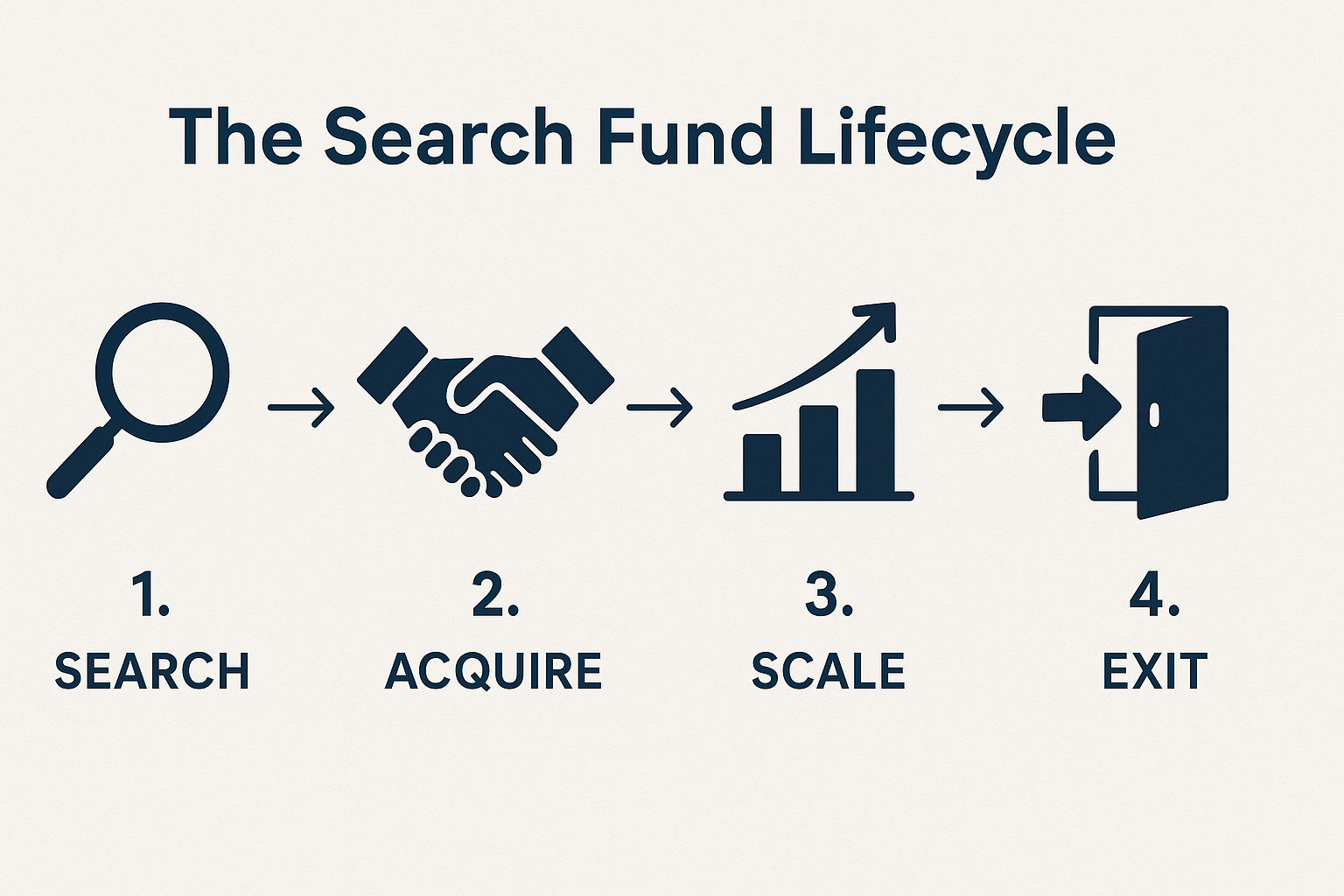
Over 500 search funds have launched since 1984, with healthcare and consumer sectors being top targets. Unlike riskier venture capital-funded startups, these businesses—think gym chains, service companies, or healthcare firms— typically have steady profits at acquisition, with the median EBITDA (Earnings Before Interest, Taxes, Depreciation & Amortization) at ~$3.8M/year. The process roughly unfolds in four steps:
- Pesquisar: The entrepreneur spends 1–2 years finding an ideal acquisition target, with search costs funded by investors.
- Acquisition: Investors fund the equity portion of purchase, the rest is financed by debt. They typically keep ~75% of the equity, with the entrepreneur keeping the remaining ~25% of equity, colloquially called “sweat equity”, as he or she is going to be actually running the company, not the investors.
- Growth Phase: The entrepreneur runs the business, boosting profits through operational improvements, add-on acquisitions, and marketing know-how.
- Exit: After 5–7 years, the businesses are typically sold, often to Private Equity firms, delivering returns for investors and the entrepreneur. Since 1984, search funds have averaged a 35.1% Annual Return (IRR) e a 4.5x Return on Investment (ROI), according to a Stanford 2024 study on North American Search Funds.
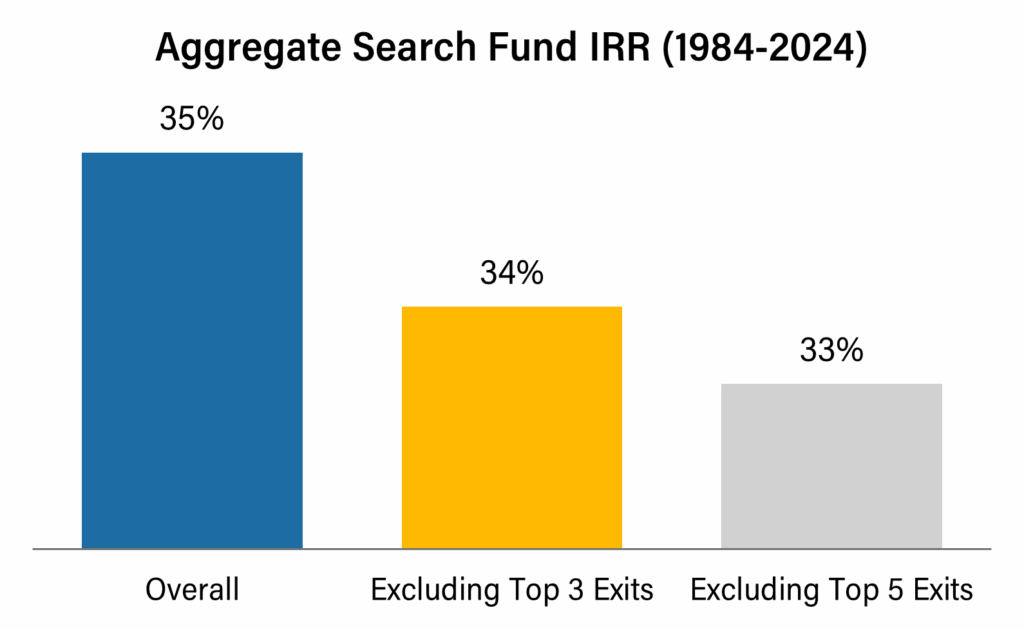
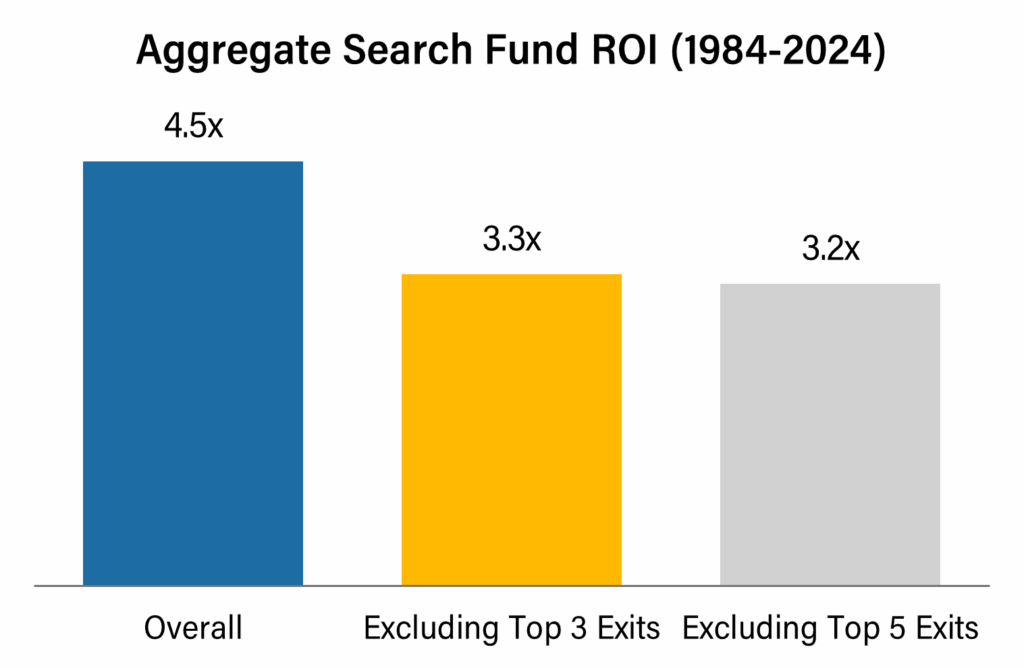
Source: Stanford GSB Study on North American Search Funds (2024).
Why Athletes Are Perfect for Search Funds
Na Handal Dunaway, we view athletes as great potential investors for Search Funds given the numerous synergistic opportunities for athletes and searchers alike. Unlike typical investors (e.g., wealthy individuals or institutions), an athlete’s brand equity—fame, trust, and fan-base—can can help differentiate a business and boost their growth trajectory.

Some potential synergies:
- Brand as a Growth Engine: An athlete’s direct involvement in a small-and-medium-sized business, be it through an endorsement, in-person appearances, or by putting their name on the door, can make sales skyrocket.
- A search fund acquiring a fitness chain, for example, could see revenue soar with an athlete’s social media posts or event appearances. By tying the athlete’s brand to the business’ own, they can leverage the athlete’s fan-base and bring mainstream awareness to their brand. In highly-competitive markets, that can be make-or-break and set it apart from the competition in consumer’s minds.
- Stable Cash Flow: These businesses are typically profitable on acquisition, offering investors the opportunity to receive dividends down the line as well as the potential for a big payout upon sale, unlike more volatile VC-funded startups that can take years or even decades to produce a profit, if they ever do.
- Low Time Commitment for Investors: The entrepreneur handles operations and the vast majority of the work, so investors can focus on their own careers and families.
- Differentiated Capital for Searchers: The top Search Fund entrepreneurs, those with the most experience and the highest likelihood of success, typically have a significant number of investors wanting to participate in their capital raise. Including athletes in their cap table can provide them with a marketing edge and even a built-in customer base in addition to capital.
Athletes and MBAs: A Potential Wealth-Building Partnership
In short, Search Funds provide athletes with the opportunity to own a significant equity stake in an already profitable business that’s going to be run by smart, ambitious entrepreneurs with serious skin in the game. They give athletes the chance to create value and wealth by leveraging their personal brands without having to commit much time, and they give searchers a marketing edge over competitors. By investing in Search Funds, athletes can combine their influence with a searcher’s business-savvy to build market leaders and considerable wealth for them and their families.
Handal Dunaway: Specialized in Helping Athletes and Coaches Invest
Na Handal Dunaway, we know that athletic careers are intense—but often short-lived. That’s why our team is dedicated to helping professional athletes and coaches turn today’s earnings into long-term wealth. We offer tailored investment strategies and comprehensive financial planning built specifically for athletes and coaches, as well as access to unique investment opportunities within Private Equity, such as our proprietary Private Equity funds and the top Search Funds. Whether you’re just starting out or planning for your next chapter, we’re here to make sure your success off the field matches what you’ve achieved on it.
Sources and Case Studies
- Kelly, P., & Heston, S. (2024). 2024 Search Fund Study. Center for Entrepreneurial Studies, Stanford Graduate School of Business. CASE E-870. Retrieved from Stanford GSB.
- Kowalewski, A.-S., Kelly, P., Simon, J., & Johnson, R. (2024). International Search Funds – 2024: Selected Observations. IESE Business School. Retrieved from www.iese.edu
- Gbadebo‑Smith, O. (n.d.). Why More Entrepreneurs Are Choosing To Build Search Funds Over Startups. Toptal. Retrieved from https://www.toptal.com/management-consultants/startup-funding-consultants/search-fund
- Calcaterra, C. (2025, May 5). Understanding Search Funds. CAIA Association. Retrieved from https://caia.org/blog/2025/05/05/understanding-search-fundsRozenrot, E. (2005). Note on Search Funds (Case No. 5-0034). Tuck School of Business at Dartmouth College. Written under the supervision of F. Wainwright.