

The Premier League’s approval of the Squad Cost Ratio (SCR), its new salary cap, is not a measure to enhance competitive balance. It is more likely a strategy by club owners to improve the investment profile of their franchises by compressing labor costs and making player-related expenditures more predictable for institutional capital.
The new ratio limits clubs to spending 85% of revenues on wages and agent commissions, with only temporary exceptions. In effect, it imposes limits on player compensation while placing no comparable constraints on what owners can earn or how much their ownership shares can be valued at.
The league and the owners are advertising this as a move for competitive balance in an attempt to sway public opinion, but in practice it limits the earning potential of players in the name of a principle they themselves do not follow.
EPL’s New Salary Cap, Explained
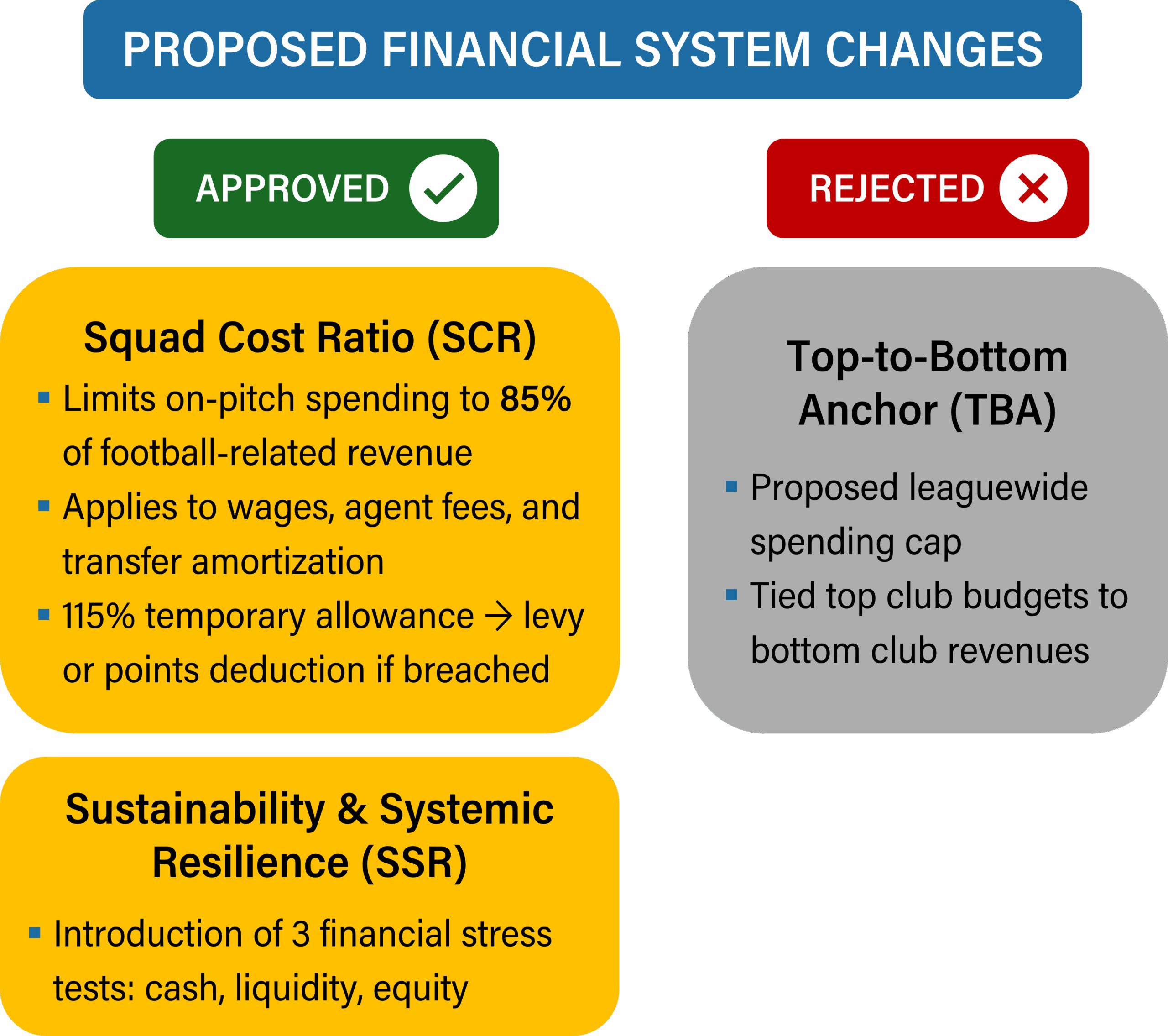
Three proposals were reviewed, two passed and one, a leaguewide spending cap focused on competitive balance, was rejected.
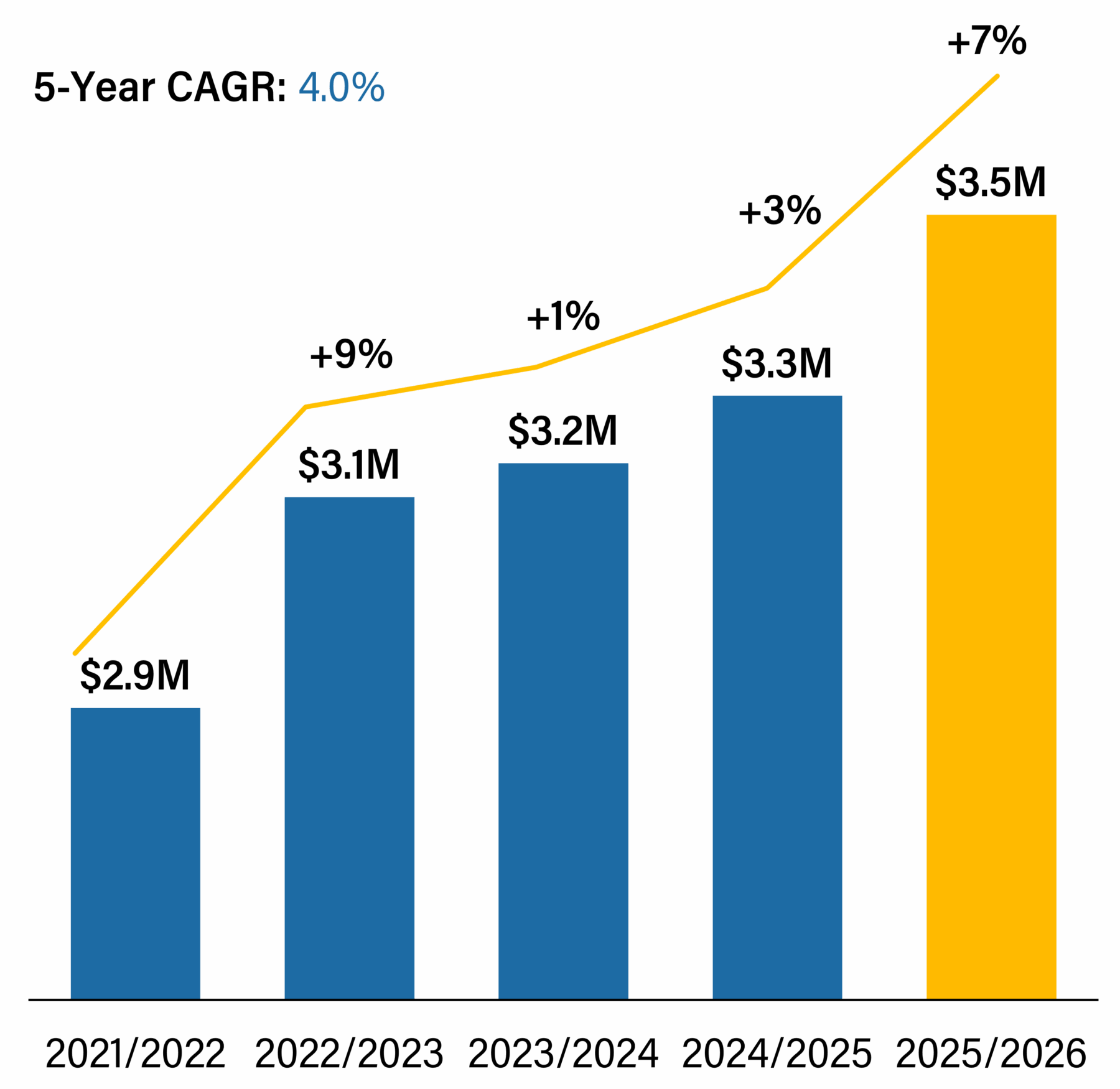
This decision arrives at a time when wages are already stagnating in real terms. According to Handal Dunaway’s 2025 English Premier League Compensation Report™, median guaranteed compensation stands at $3.5 million for the 2025 to 2026 season and has grown at a 4.0% annual rate in nominal terms over the last 5 seasons, which is lower than the rate of inflation.
Owners, meanwhile, have seen their ownership shares appreciate at more than 20% per year over the same period, as recent club acquisitions have revealed. Those club owners, seemingly in an attempt to capitalize on the growing appeal of sports teams as acquisition targets for Private Equity and institutional investors, are placing limitations on how much they compensate the athletes that were indispensable to that value creation.
Inflation Has Consumed Wage Growth in the League
The compensation trend illustrates the real issue. Even as wages rose in nominal terms across the last 5 seasons, the increases were outweighed by broader economic conditions. Compensation grew at a 4.0% annual growth rate but did not keep pace with the roughly 4.5% annualized inflation rate in the United Kingdom over the same period.
Players are being asked to accept wage caps precisely when their real earnings are declining. A wage cap introduced in this environment is not a tool for competitive balance. It is but another mechanism that protects ownership interests and enhances potential exits through institutional capital.
EPL Player Median Guaranteed Compensation Growth
2021/2022 – 2025/2026 Seasons
A Salary Cap That Protects the Existing Hierarchy
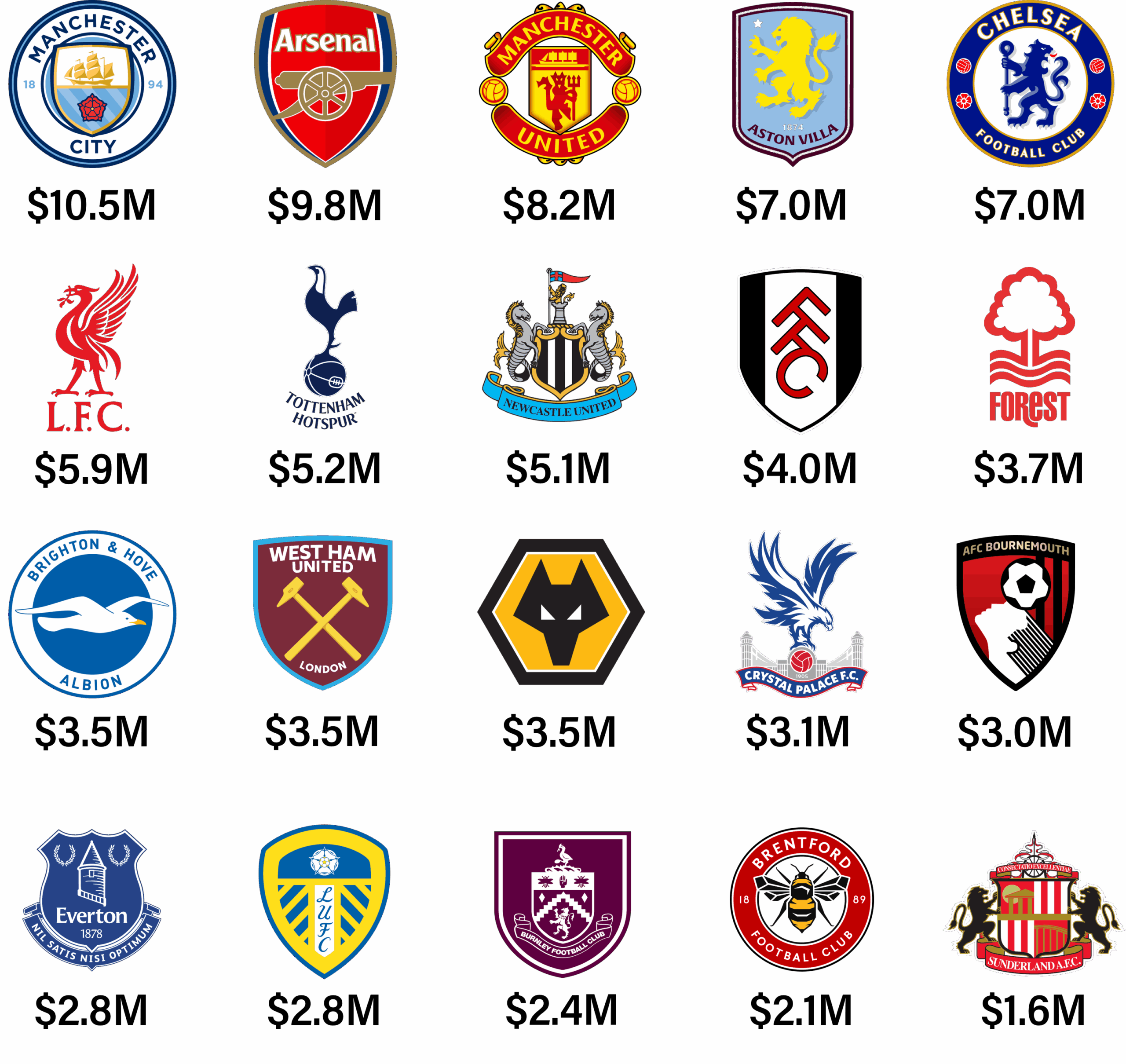
The club-by-club compensation data shows a league already defined by significant structural inequality. Manchester City’s median guaranteed compensation reaches $10.5 million, and Arsenal sits at $9.8 million, while clubs like Bournemouth and Sunderland operate at far lower levels. These gaps are longstanding features of the Premier League’s commercial landscape and reflect global brand power, international fan bases, and decades of accumulated commercial infrastructure.
The salary cap as approved does nothing to reduce these disparities, and owners rejected a separate proposal that would have balanced the spending capacity of the wealthier teams with the smaller ones.
By tying wage spending to revenues, the cap locks the existing order in place. Larger clubs retain their financial and competitive advantages while smaller clubs remain constrained. Nothing in the new system redistributes opportunity or compresses the financial distance between teams.
Rather, it seems the competitive balance argument is a false flag onto which owners are hiding behind. The goal instead seems to be an attempt at replicating the US sports model of more controlled and predictable spending.
The move goes against the free-market principles that have long reigned in European football. Furthermore, it is likely an abuse of monopoly power that will invite governmental scrutiny, especially considering the stricter monopoly regulations in the UK compared to more lenient US laws.
EPL Median Guaranteed Compensation by Club
2025/2026 Season
The Accelerating Premier League Club Valuations
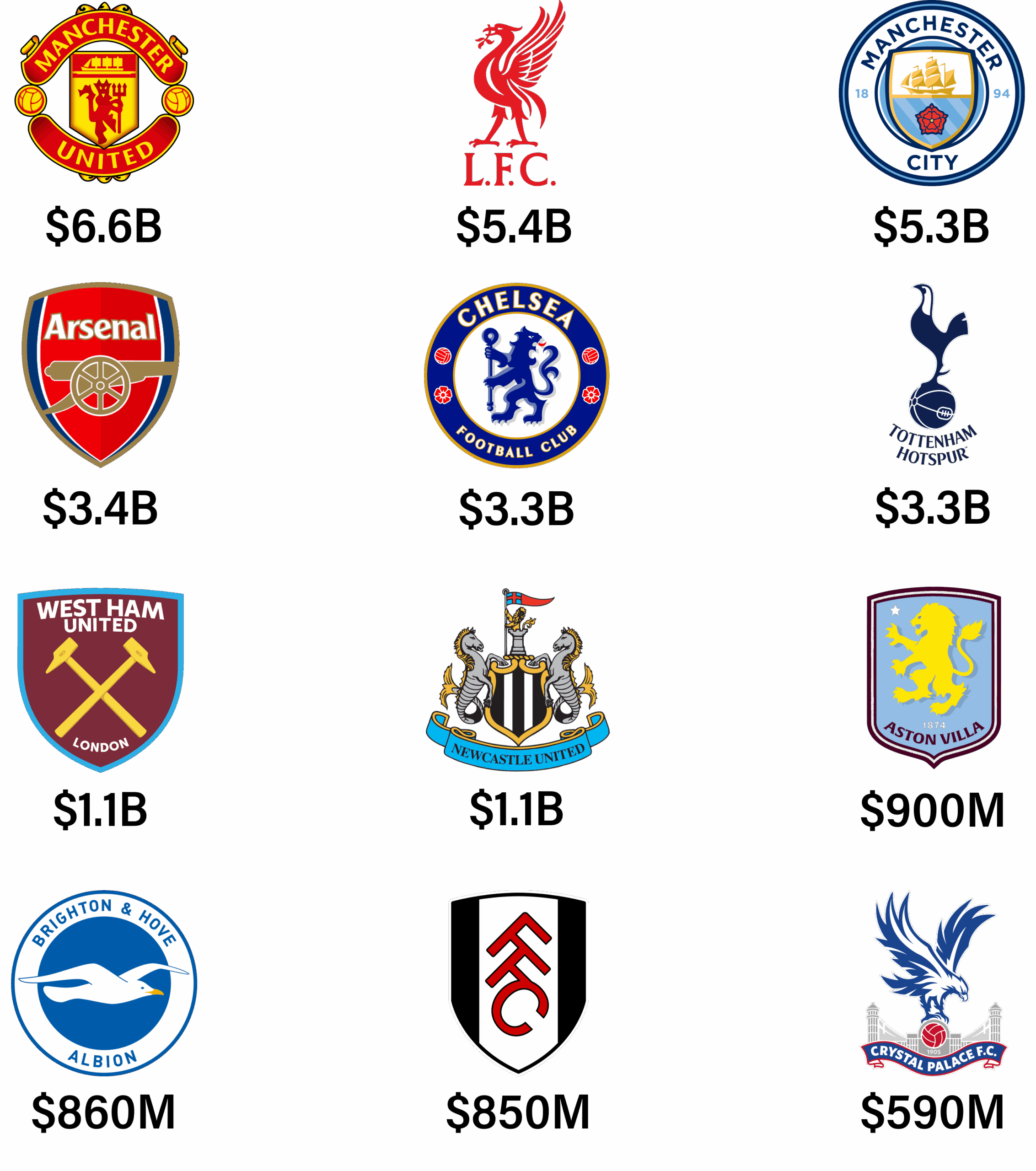
Crystal Palace provides a clear illustration of how quickly and how club valuations have grown this decade. In 2021, John Textor purchased a 40% stake for $108 million, valuing the club at ~$268 million. When Woody Johnson acquired a 43% stake for $254 million in 2025, the implied valuation of the club had climbed to $590 million, a 22% annual growth rate, and a 120% markup in just 4 years.
This transaction, even for a relatively small team, highlights a fundamental imbalance. Owners will continue to benefit from rapid, market-driven appreciation, while the players themselves, whose work has created this value, are seen their wages stagnate and now face further limits on compensation growth.
The Likely Motivation: Attracting Private Equity
Wealthy Americans have been moving into European football, particularly the Premier League, for some time. As Private equity firms and institutional investors have shown more interest in the sector in recent years, club valuations have grown significantly higher. But for these financially-driven firms, the unpredictability of player wages, transfer fees, and agent commissions in the European landscape is a major deterrent.
In the United States, salary caps make labor costs more predictable. This creates easier modeling conditions for potential buyers when they evaluate potential returns on their investments.
Top Premier League Valuations
The Premier League owners are now attempting to get closer to this model. A salary cap in the league would make clubs more attractive, predictable investments and would be a catalyst for valuation growth.
This Move Will Damage Players More than Anybody
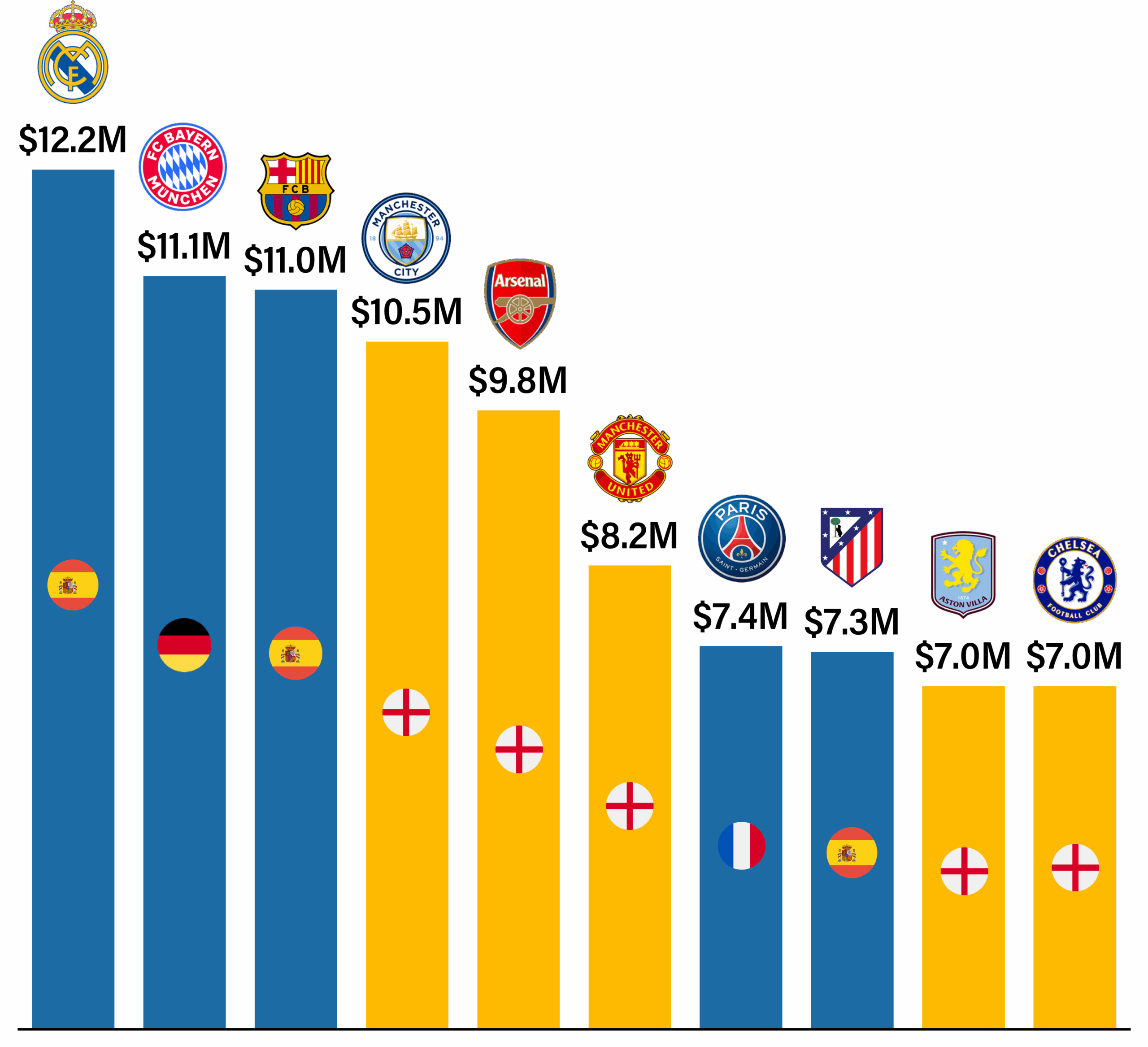
The people who will suffer most from the new mechanism will be mid-table players. Players at the EPL Big 6 have significantly more employment options in other European leagues, as elite teams such as Real Madrid, PSG or Bayern offer pay that is competitive with elite EPL teams. It is the players at mid-table teams that do not have as many options, as the mid-table teams in La Liga, Bundesliga or Serie A don’t pay anywhere near what mid-table EPL teams pay. They will bear the brunt of the wage suppression burden.
This may be a reason owners why pushed this through without much transparency or consent from other stakeholders. They know agents and players alike would oppose it. And they know most players cannot and will not leave the Premier League for higher wages elsewhere, simply, because the market doesn’t exist. It is a major flexing of their monopoly power, and a fact a potential UK Competition Act investigation would likely focus on.
This policy has little to do with fair play or equality, as the market already determines fairness. Player value and compensation in a free market is based on what clubs have been willing to pay. Players are not the ones increasing salaries, other owners are. But as the competition for talent has grown more heated across Europe and salaries have increased, so have attempts by teams to limit the growth that the free market has brought.
Top 10 European Teams by Median Compensation
2025/2026 Season
A Legal Fight Is Likely
England’s Professional Footballer Association (PFA) has already signaled it will pursue legal challenges. Major talent agencies have indicated they might follow. Capping fees and wages without negotiation with the key stakeholders that stand to be most affected by them disrupts not only football labor markets, but the entire ecosystem: players, intermediaries, coaches, youth development, scouting, and the global transfer market.
This decision extends far beyond the Premier League. It indirectly affects every seller and buyer club in Europe, every intermediary, and every player whose wage and career trajectory is now artificially suppressed.
Absent a negotiation with the PFA, the legality of the salary cap will probably be determined in court. Market forces already regulate talent prices, and any artificial suppression of them will only end with players earning less than they otherwise would.
A new salary cap that helps valuations while keeping wages down is not an attempt to make the league more competitive, it is a wealth transfer from labor to ownership. It should not be accepted by the players or their representatives without a fight, as forcefully resisting these limitations will ensure that it is the free market, not the owners, who determine what constitutes fair compensation.