
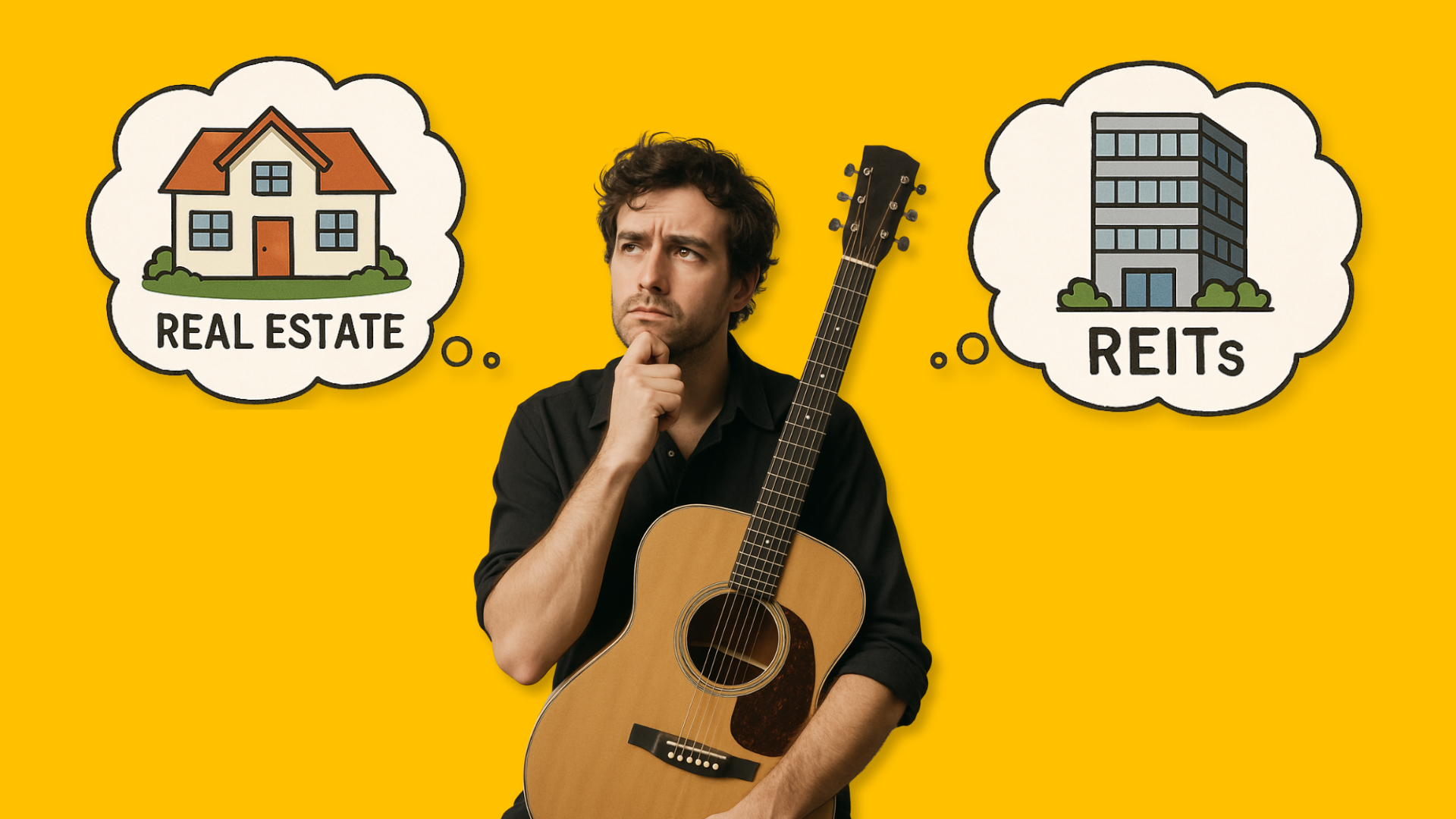
For many artists and entertainers, buying a house, apartment, or rental property is seen as the ultimate sign of “making it.” Real estate feels tangible, stable, and familiar. But the reality is that direct ownership can be time-consuming, capital intensive, and risky — especially for those with unpredictable income cycles and busy travel schedules.
Real Estate Exposure, Simplified
Real Estate Investment Trusts (REITs) offer a way to gain real estate exposure without becoming a landlord. REITs are companies that own or finance income-producing properties — from apartment buildings and warehouses to office towers and data centers — and allow investors to buy shares, just like buying stock.
For artists, that means you can invest in real estate from your phone, in minutes, with the ability to sell when you need liquidity. And because U.S. REITs are legally required to distribute at least 90% of taxable income as dividends, they can provide a steady stream of cash flow — something particularly valuable in industries where income can be feast or famine.
The Case for REITs: Flexibility, Liquidity, and Freedom
Liquidity When You Need It
Selling a property can take months, involves 5–6% transaction costs, and often requires dealing with negotiations, inspections, and repairs. REIT shares, by contrast, can be sold in seconds on public markets, giving artists access to capital when opportunities — or emergencies — arise.
Diversification for Stability
Owning one or two properties exposes you to local risks — downturns, natural disasters, zoning issues, or even a single neighborhood’s market collapsing. A single bad event can wipe out years of appreciation. REITs spread investments across hundreds or thousands of properties, often across multiple regions or even countries. This diversification shields you from the financial hit of a hurricane in one city, a steep price drop in one neighborhood, or costly legal disputes over a single parcel of land.
Passive Income Without the Headaches
Being a landlord takes time — something busy artists rarely have. Finding tenants, collecting rent, and handling maintenance calls at 2 a.m. is not exactly tour-friendly. REITs remove the operational burden while still allowing you to benefit from real estate income and appreciation.
Understanding the Risks
REITs are not risk-free. They are sensitive to interest rate fluctuations — when rates rise, borrowing costs increase and REIT share prices can fall. In 2022, for instance, the FTSE Nareit All REITs Index declined 25.1% during aggressive rate hikes, before recovering in subsequent years.
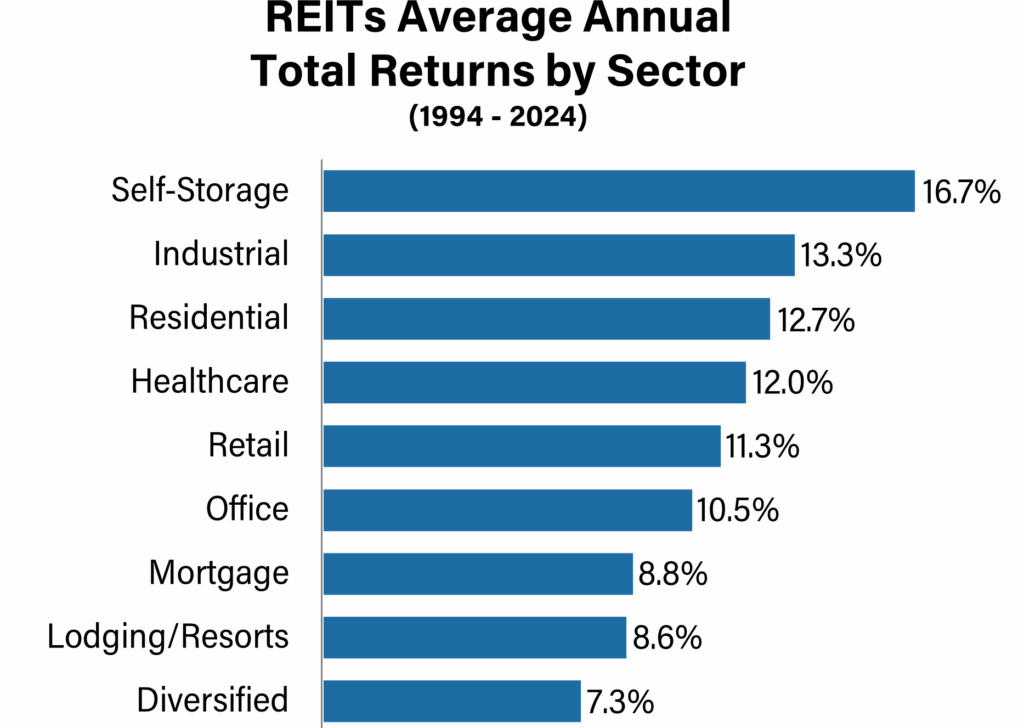
REIT prices also move daily, which can test investor discipline during market downturns. And different sectors have different profiles — office REITs face headwinds from remote work, while residential and logistics REITs have benefitted from housing shortages and e-commerce growth. Careful selection and diversification across sectors is key.
Why REITs Fit the Artist Lifestyle
For artists and entertainers, REITs align perfectly with the demands of a career that is anything but ordinary:
- Liquidity for Life’s Surprises – The ability to access cash quickly means you can fund a project, cover a gap between gigs, or seize an investment opportunity without selling a house.
- Professional Management – Your time is best spent on your craft, not fixing a leaky roof.
- Global Exposure – Many REITs own properties across multiple countries, letting you benefit from global trends without needing a second passport.
- Portfolio Balance – REITs can provide steady dividends that complement the more volatile income streams typical of entertainment careers.
The Smart Move
REITs are not just an investment vehicle — they are a way to make your wealth work as hard as you do. They offer the benefits of real estate ownership — income, appreciation, diversification — without the operational drag.
For artists, this means the freedom to focus on what you do best, with the confidence that your money is invested in a way that is flexible, liquid, and professionally managed.
At Handal Dunaway, we work with artists and entertainers to design portfolios that fit their creative lifestyle, career volatility, and long-term financial goals. Whether it’s REITs, private equity, or other asset classes, our goal is to help you build wealth with clarity, discipline, and purpose.